ZÉPHIRINE DROUHIN – pink climbing rose – Bizot
Fragrant and richly flowered, this historic Bourbon climber offers an easy-care way to dress walls, arches and fences with classic pink blooms and a powerful old-fashioned perfume. Its nearly-thornless canes are far kinder to hands and passers-by than most climbers, making it especially suitable beside paths and doorways in busy family gardens. As an own-root plant it establishes steadily for a long, reliable life, coping well even in cooler, exposed sites where coastal winds and damp weather can test lesser roses. Naturally shade-tolerant, it can be trained into corners and north- or east-facing aspects, where many roses struggle. Growth is vigorous yet manageable, with flexible shoots that are easy to train onto pergolas or wires, and it repeat-flowers generously through summer, bringing weeks of colour from each flush. Over time your plant develops from strong roots in the first year to fuller top growth in the second, then by the third year it reaches its full ornamental impact, forming a stable, enduring feature with minimal effort.
Usage options
| Target area | Reasoning |
|---|
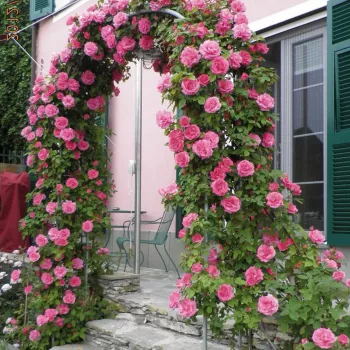
| Front garden arch or porch entrance |
The very strong, classic rose fragrance creates a welcoming entrance as you pass underneath, and the large, double, medium-pink flowers give a traditional cottage feel from late spring through summer. Ideal for those who value a scented approach to the front door, including the busy but style-conscious beginner. |
| Family seating area, terrace or patio edge |
Its vigorous, repeat-flowering habit provides long seasonal colour when trained on a pergola or screen near seating, with flushes that follow one another reliably through summer. Once established, it forms a long-lived framework that returns year after year without replanting, suiting gardeners who want dependable structure and bloom, especially the long-term-planning homeowner. |
| Along fences and boundary lines |
The nearly thornless growth makes routine fence access and pathway use safer and more comfortable than with many climbing roses, while the dense flowering offers soft visual screening. This combination of gentler stems and good coverage is particularly useful for family gardens with children or pets, and appeals to the practical, safety-minded gardener. |
| North- or east-facing walls in partial shade |
Shade tolerance allows successful flowering where many roses underperform, giving you options on cooler, less sunny aspects of the house or garden. In typical British conditions with changeable light and damp spells, this trait means reliable colour without needing a south-facing wall, which suits owners of smaller plots and constrained urban gardens. |
| Low-maintenance cottage-style borders |
Good overall disease resistance and modest maintenance needs keep spraying and intensive care to a minimum, fitting well with relaxed, naturalistic planting. The foliage stays attractive with basic hygiene and watering, so the rose integrates smoothly into informal mixes with perennials, supporting time-pressed yet aesthetics-focused gardeners. |
| Structure planting for long-term garden design |
As an own-root climber it builds a stable, durable framework that regenerates well if pruned hard or damaged, providing a long lifespan without needing to replace grafted plants. This resilience underpins future-proof designs, ideal for those planning a garden to mature gracefully over many seasons, such as investment-minded homeowners. |
| Feature climber in mixed cottage borders |
Its vigorous growth and flexible shoots make it straightforward to fan out and tie in along trellis or wires, so shaping and training feel approachable even for less experienced gardeners; it soon covers its support without fussy techniques, satisfying the confidence-building beginner. |
| Large container or planter near the house |
When grown in a substantial container of at least 40–50 litres with good drainage, it offers strong fragrance and repeat flowering close to windows or seating. A roomy pot and regular watering help it cope well with British wind and rain near exposed corners, answering the needs of balcony, courtyard and compact-space gardeners. |
Styling ideas
- Cottage Archway – Train over a metal or timber arch with penstemon and catmint at the base for a fragrant, romantic entrance – ideal for lovers of traditional cottage gardens.
- Soft Screen – Use along a boundary fence with airy grasses and blue globe thistles to create a gentle privacy screen that still feels open – suited to family gardens needing subtle separation.
- Shaded Corner – Plant in partial shade with ferns and white Lychnis for a luminous pink focus where other roses fail – perfect for small, awkward side gardens.
- Patio Pergola – Let it climb a simple pergola above a seating area and underplant with lavender for continual scent and colour – for homeowners who entertain outdoors in summer.
- Historic Feature – Combine with old-fashioned perennials such as foxgloves and hardy geraniums against a brick wall to highlight its heritage character – appealing to fans of period and heritage planting.
Technical cultivar profile
| Parameter | Data |
|---|
| Name and registration |
Zéphirine Drouhin – historic Bourbon climbing rose, commercial type climber/rambling rose; ARS exhibition name Zephirine Drouhin; unregistered cultivar, authenticated premium-quality stock for garden use. |
| Origin and breeding |
Raised in France by H. Bizot from an unknown Bourbon seedling and introduced in 1868; one of the classic, long-proven climbers in European gardens with enduring popularity for ornamental use. |
| Awards and recognition |
Holds the Royal Horticultural Society Award of Garden Merit (1993), confirming reliable garden performance, ornamental quality and practical robustness under typical UK growing conditions and care levels. |
| Growth and structural characteristics |
Vigorous climbing habit 280–520 cm high and 180–320 cm spread, with moderately dense, mid-green matt foliage and canes that are nearly thornless; best when tied and fan-trained onto suitable supports. |
| Flower morphology |
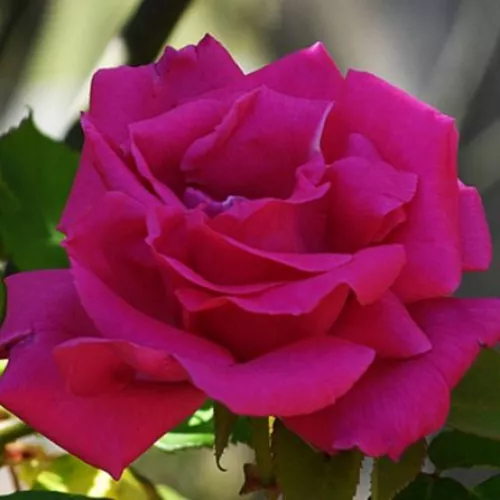
Large, double, cup-shaped blooms with 26–39 petals, usually borne singly on the stems; remontant habit with a notably abundant second flush, delivering repeated displays through the main growing season. |
| Colour data and phenology |
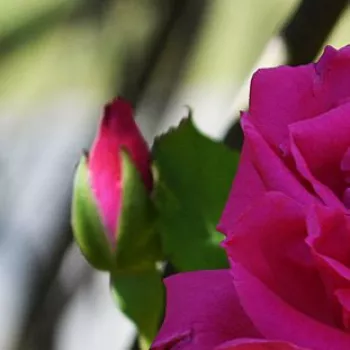
Intense medium-deep pink with slight purple tone; buds fuchsia-raspberry, opening warm mid-pink and fading through lighter edges to a powdery, creamy pink, giving a lively depth of colour as flowers mature. |
| Fragrance and aroma |
Very strongly scented, with a classic old-fashioned rose perfume that is readily noticeable in the garden; suitable where fragrance is a priority, though mainly ornamental rather than for culinary or cosmetic use. |
| Hip characteristics |
Occasional spherical orange-red hips, 9–15 mm in diameter; fruiting is irregular and not a major ornamental feature, so hip display should be considered a minor and variable seasonal bonus. |
| Resistance and winter hardiness |
RHS H7, Swedish zone 4, USDA 5b; hardy to about −26 to −23 °C. Rated resistant to powdery mildew, black spot and rust, supporting lower-input care in typical damp, variable UK climates. |
| Horticultural recommendations |
Ideal for arches, arbours, pergolas, walls and fences at 240–400 cm spacing; low maintenance with regular watering in dry spells and spent bloom removal, plus light framework pruning to manage size. |
Zéphirine Drouhin offers powerful fragrance, repeat flowering and nearly thornless growth on a long-lived own-root framework, making it an excellent choice if you seek a characterful yet straightforward climbing rose.