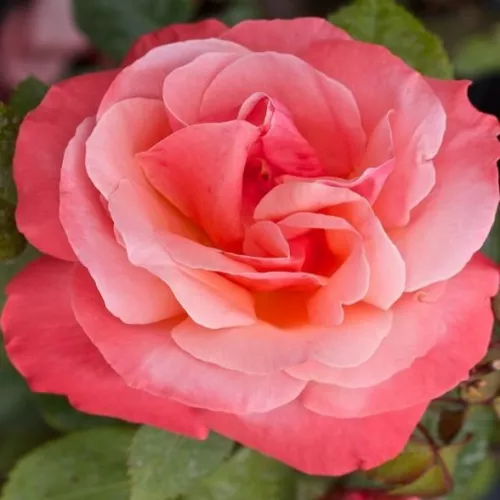
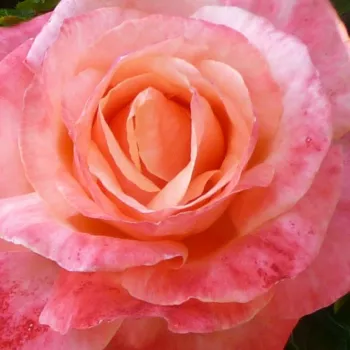
Flower with a salmon-pink inner surface, a peach-coloured base and a slightly cream-coloured reverse, subtly bicoloured. The combination of warm pink and peach creates a soft, pastel effect. - hybrid tea rose - mild, discreetly scented rose - delicately r
– Large, elegant, high‑centred exhibition blooms.
– Soft salmon‑pink and peach, gently bicoloured.
– Reliable repeat flowering with abundant second flush.
– Upright, bushy habit with glossy dark foliage.
– Award‑winning Hybrid Tea with proven show record.
– Special feature: Extremely hardy to RHS H7, ideal for cold gardens.
Natural renewal – Characterful choice
pharmaROSA® ORIGINAL 2-litre own-root potted rose
18,70 £
Unfortunately, we are currently unable to ship to the United Kingdom; we only deliver to countries within the European Union. For more information, please contact us!
3.5(5571)
Silver Jubilee™ hybrid tea rose – Cocker & Cocker
Elegant and richly petalled, Silver Jubilee™ brings generously sized hybrid tea blooms in soft salmon-pink and peach tones that sit beautifully in cottage-style beds and classic front gardens, even where breezy coastal conditions bring frequent rain and wind. Its upright habit and dark, glossy foliage create a neat, architectural presence, ideal for compact borders or as a stand-out specimen by the path. This cultivar offers reliable repeat flowering through the season, producing exhibition-quality blooms you can cut for the house without depleting the display outdoors. Mild, fruity fragrance and good hardiness support a long garden life, while the own-root form supports strong renewal and recovery after routine pruning. In a typical family garden it settles steadily – year one for rooting in, year two for bushy growth, and by year three you can expect its full, mature ornamental effect with minimal complication.
Silver Jubilee™ in full bloom, showing its softly bicoloured pink and peach flowers.
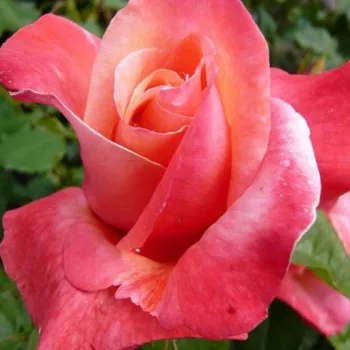
Freshly opened bloom of Silver Jubilee™ hybrid tea rose
Silver Jubilee™ zárt bimbója, mélyebb lazacrózsaszín külső szirmokkal.
Usage options
Target area
Reasoning
Front garden focal point
The strong, upright habit and dense, glossy foliage give a tidy, vertical accent beside a doorway or path. Large, high‑centred blooms read clearly from the pavement, echoing classic British front‑garden style with a single, well‑kept shrub. Perfect for the busy homeowner.
Small mixed border in family garden
Medium maintenance needs suit a family border where time is limited but you still want structure and colour. Moderate disease resistance and winter hardiness reduce intensive care, while own‑root growth helps the plant regain shape if pruning is a little irregular. Ideal for relaxed beginners.
Cutting patch or cut‑flower corner
Extra‑large, high‑centred blooms on good, upright stems make this variety excellent for vases and arrangements. Repeat flowering allows you to cut stems regularly while the bush continues to bloom outdoors, supporting a summer‑long supply of classic hybrid tea flowers. Suited to creative gardeners.
Roses in containers on patio or terrace
When planted in a large 40–50 litre container with good drainage, its controlled spread and vertical habit keep the plant proportionate to small spaces. Regular watering supports flowering, while own‑root resilience helps recover if a dry spell is missed. Appealing for small‑space city‑dwellers.
Formal rose bed or classic hybrid tea row
Recommended spacing allows you to form a precise, evenly repeated line of shrubs, giving structure in front gardens or along drives. Consistent flower form and colour help create a unified, formal appearance that still feels soft and romantic. Ideal for symmetry‑loving planners.
Cottage‑style border with perennials
The pastel salmon‑pink and peach blooms blend gently with blues and creams, pairing well with perennials and shrubs without clashing. Its upright profile slots between looser plants, ensuring the rose remains visible while others weave around it. Attractive to cottage‑garden enthusiasts.
Feature rose in slightly exposed gardens
Hardiness to typical UK winter lows and a sturdy, upright frame make it a sound choice where gardens are open to wind, provided soil is prepared with drainage to cope with frequent coastal rain and gusty conditions. A reassuring option for weather‑aware owners.
Specimen rose in lawn or gravel bed
Planted alone at the recommended spacing, it develops into a balanced, bushy shrub with showy blooms and dark foliage that stand out against simple grass or gravel. Own‑root growth supports long‑term stability of shape and flower display. Well suited to low‑fuss stylists.
Styling ideas
Cottage Harmony – Combine Silver Jubilee™ with Vinca minor and soft blue hardy geraniums for a pastel, low‑maintenance front border – ideal for lovers of informal cottage charm.
Elegant Entrance – Flank a path or front step with single specimens underplanted with white lavender for structure and scent – perfect for homeowners wanting a smart, classic welcome.
Patio Showcase – Grow one plant in a 50‑litre terracotta pot with trailing thyme at the rim to enjoy repeat cuts for the vase – suited to balcony and terrace gardeners.
Formal Ribbon – Plant a straight row at recommended spacing along a driveway or path for a traditional hybrid tea display – for those who appreciate orderly, symmetrical planting.
Woodland Edge Mix – Pair with Cornus kousa and shade‑tolerant perennials at a sunny woodland edge, letting the rose provide structure and colour – appealing to gardeners with semi‑natural schemes.
Technical cultivar profile
Parameter
Data
Name and registration
Hybrid tea rose, registered as COCjubilee, marketed as Silver Jubilee™ hybrid tea rose COCjubilee; ARS exhibition name Silver Jubilee; part of the Hybrid tea rose commercial group.
Origin and breeding
Bred in Scotland before 1977 by Alexander Morison Cocker and Anne Grant Cocker from complex hybrid parentage; introduced 1978 by James Cocker & Sons Ltd. and Anne G. Cocker.
Awards and recognition
RNRS President’s International Trophy 1977, Portland Gold Medal 1981, James Mason Memorial Prize 1981, Belfast Gold Medal 1985, confirming high ornamental and exhibition value.
Growth and structural characteristics
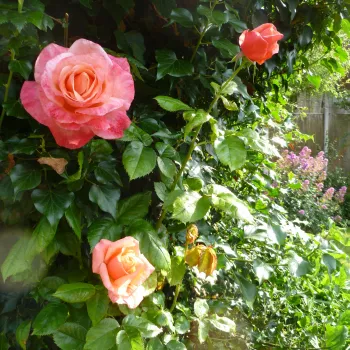
Upright bush 100–140 cm tall, 75–105 cm spread, with dense, dark green glossy foliage and moderate thorns; forms a well‑filled shrub when spaced correctly in beds or as a specimen.
Flower morphology
Large, double, 26–39 petalled hybrid tea blooms, high‑centred and pointed in bud, usually borne singly on stems; reblooms well, with an abundant second flush in suitable conditions.
Colour data and phenology
Soft salmon‑pink and peach bicolour with cream reverse (RHS 36B, 36D); colour fades gently to pastel pink tones, more quickly in strong sun, yet retains a delicate, refined appearance.
Fragrance and aroma
Mild, discreet rose fragrance with a light fruity character; pleasantly noticeable near the plant or on cut stems indoors without being overpowering, suitable for sensitive households.
Hip characteristics
Produces moderate numbers of small, spherical red hips 10–14 mm in diameter, globular and decorative, offering some late‑season interest if spent flowers are not removed.
Resistance and winter hardiness
Hardy to about −26 to −23 °C (RHS H7, USDA 5b, Swedish Zone 4) with moderate disease resistance; powdery mildew resistant, black spot and rust of medium susceptibility.
Horticultural recommendations
Best in sunny sites with regular watering during dry spells; medium maintenance with occasional pest and disease checks; recommended distances vary from 55–100 cm depending on use.
Silver Jubilee™ hybrid tea rose combines generous, pastel exhibition blooms, dependable repeat flowering and long‑term own‑root resilience, making it a thoughtful, enduring choice for your garden.
Competition and Show Awards:
RNRS President’s International Trophy (1977); Portland – Gold Medal (1981); James Mason Memorial Prize (1981); Belfast – Gold Medal (1985)
Flower Colour Description:
Flower with a salmon-pink inner surface, a peach-coloured base and a slightly cream-coloured reverse, subtly bicoloured. The combination of warm pink and peach creates a soft, pastel effect.
Closed Bud:
On the outer surface a deeper salmon-pink, inside a pale, silky pink shade.
Newly Opened Flower:
The inner petals are a vivid, warm salmon-pink with a peach-coloured base, while the outer petals have a paler peach surface; their reverse shows a translucent, cream-toned hue.
Full Bloom:
Fully open, the flower’s centre is full, a soft salmon pink with light peach‑pink transitions at the petal edges; the reverse of the outer petals gleams creamy peach, delicately marbled with pink.
Before Fading:
The salmon-pink hue gradually softens to a mauve-pink and creamy apricot; the edges of the outer petals are almost pastel pink, and the underside is a light, warm apricot.
Colour Fading Description:
During opening, the creamy salmon-pink gradually fades, finally leaving only a delicate pink edge; in strong sunlight it fades more quickly.
Pollinator Attraction:
The flowers are moderately attractive to pollinators, as their semi‑double form partly conceals the stamens and thus reduces pollen accessibility.
Pollinator-Friendly Rating:
Its double flowers partly obscure the stamens, so it is a moderately pollinator-friendly variety.
Our product is a rose grown with pharmaROSA®’s unique cultivation technology!
2-litre, own-root, potted rose.
With a shoot system appropriate to the season.
With a root system that thoroughly permeates the growing medium.
Quality compliant with the requirements of the E.N.A. (European Nurserystock Association).
Supplied in unique packaging that prevents damage.
Can be planted during frost-free periods.
True-to-variety rose bush with a unique identifier.
The pharmaROSA® own-root potted rose is a well-rooted plant that supports reliable establishment when planted and cared for properly, so it can be planted whenever the soil is not frozen.
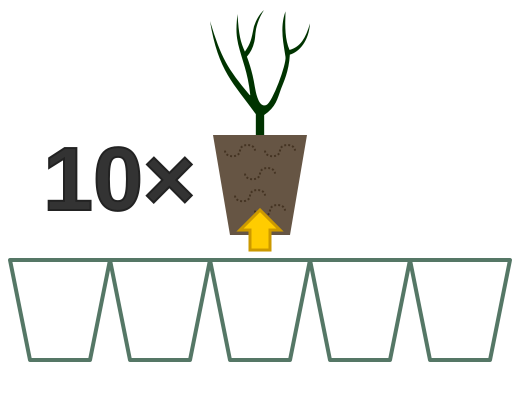
Crop overview: several varieties and growth stages in a short crop section.Shoot system: intensive growth of fresh basal shoots on a young plant.Root system: demonstration of a vigorous root system permeating the growing medium, by removing the pot.Balance: mature plant with root system and shoots in harmony with each other.
Information about the videos
The video series is not a “seasonal showcase”; it illustrates the essence of pharmaROSA® own-root cultivation in a tangible way: how the plant is built up, what the root system is like and how the shoot system regenerates. The recordings were therefore made at different times and with plants at various stages of development, so mixed foliage levels and differing stages of growth may appear in the videos. They are not a ‘sample’ of the batch dispatched, but a visual explanation of how the technology works. The current condition of the rose available to order — typical for the given period and similar to what you can expect to receive in the parcel — is shown in the upper part of the product page.
Pages for private customers Garden roses for the family garden, with minimal care → ORIGINAL® Premium garden roses – instant impact, a truly showpiece garden → EXTRA® Pages for professionals and private customers Roses for public spaces – large areas, sustainable maintenance → NATURAL® Roses for projects – hedge and row planting, fast implementation → RAPID® For professional partners only Production – propagation material for garden roses, wholesale → NEONATAL®
Company details
PharmaRosa Ltd. Company registration number: 01-09-717479 VAT number: 13075314-2-43 Plant health registration no.: HU130721 Bank account (IBAN): HU85117631891388688400000000 BIC (SWIFT): OTPVHUHB Bank name: OTP Bank Nyrt.