REPORTER – red climbing rose – TANklesant
Climbing Reporter is an easy-care red rose for arches, fences and walls, giving reliable colour without demanding expert pruning, while its own-root structure promises reassuring longevity and secure regrowth after hard winters. In typical British gardens it copes well with breezy, wet conditions, provided you give it reasonable soil preparation and avoid waterlogged corners by ensuring drainage is adequate. Semi-double clusters of vivid, velvety blooms repeat through the season for near-continuous flowering, softening brickwork and framing doors and windows in classic cottage style. Glossy dark green foliage sets off the deep scarlet flowers beautifully, and the dense cover makes an attractive, almost opaque screen along front boundaries. This reliable climber works in modest urban plots as well as slightly larger family gardens, forming a strong vertical structure over time, and its light, pleasant fragrance and pollinator-friendly, open flowers add gentle life and movement without complicating your maintenance routine.
Usage options
| Target area |
Reasoning |
| Front-garden focal arch by the entrance path |
Use Reporter over a simple rose arch to create a welcoming, traditional entrance without complex upkeep. Its repeat flowering gives reliable colour along the path for much of the season, and own-root vigour supports a long-lived arch that can be refreshed by occasional renewal pruning, suiting time-pressed home-owners and beginners. |
| Vertical screen on a sunny back-garden fence |
Trained along tensioned wires on a fence, this climbing rose builds a dense screen of glossy foliage and rich red flowers, softening hard boundaries and adding privacy. The medium maintenance level means an annual tidy is usually enough, while own-root stability helps the plant recover well after harder cuts, giving dependable cover for busy gardeners. |
| Cottage-style wall planting around windows and doors |
Reporter’s strong vertical structure and flexible canes make it ideal for wall-training around ground-floor windows or a back door, giving a classic cottage look in limited space. Regular but straightforward tying-in keeps it neat, while its long lifespan on its own roots turns a once-only planting into a durable feature for style-conscious owners. |
| Small rose-and-perennial mixed bed |
Placed at the back of a small border with perennials such as blanket flower or obedient plant, Reporter supplies a season-long column of bright red, semi-double blooms. The clusters repeat well, so you get extended colour with simple deadheading, and the accessible stamens subtly support garden wildlife valued by nature-loving families. |
| Family seating area pergola |
Trained up posts and lightly over a modest pergola, this climber offers dappled shade, flashes of scarlet red above the table, and a gentle rose scent without overwhelming fragrance. Own-root strength lets it mature steadily so you can enjoy a clear Year 1 establishment, fuller Year 2 growth and near-complete ornamental presence by Year 3, ideal for patient yet comfort-seeking households. |
| Boundary hedge replacement with climbing framework |
Where a traditional hedge is impractical, Reporter on posts and wires can form a floral barrier with medium maintenance needs. Its dense foliage provides a robust visual boundary, while its capacity to regenerate from the base after harder cutting makes long-term management easier for those wanting structure without advanced pruning skills, supporting practical gardeners. |
| Urban side return or narrow passage |
In narrow side gardens, canes can be fanned flat against a wall or fence, keeping paths clear while adding colour at eye level. Regular tying-in is straightforward, and although disease resistance is medium, adequate air flow and basic care usually suffice, fitting the needs of urban owners seeking maximum effect from limited-space planting. |
| Large patio planter with support |
For renters or paved gardens, Reporter can be grown in a large 40–50 litre container with a trellis or obelisk, provided watering is regular and excess moisture can drain away in prolonged wet spells typical of many UK summers. The combination of repeat blooms and own-root resilience makes this an appealing long-term feature for container-gardeners. |
Styling ideas
- Classic archway – Train Reporter symmetrically over a simple metal arch, underplanting with lavender or catmint for soft blue contrast and fragrance – ideal for lovers of traditional front-garden structure.
- Cottage mix – Combine at a sunny wall with foxgloves, hardy geraniums and hemp agrimony to create a relaxed, layered cottage style – good for gardeners who prefer informal abundance over strict formality.
- Red accent fence – Run canes along horizontal wires on a front fence, pairing with white flowering perennials for a crisp scarlet-and-white scheme – suited to design-conscious owners wanting strong kerb appeal.
- Pergola retreat – Spiral stems up the posts of a small pergola, mixing with a late-flowering clematis for extended colour and light overhead shade – attractive for families wanting a calm, usable outdoor sitting area.
- Container feature – Plant Reporter in a 40–50 litre half-barrel with a tall obelisk, edging the pot with low herbs to soften the base – perfect for balcony or courtyard gardeners needing portable structure and colour.
Technical cultivar profile
| Parameter |
Data |
| Name and registration |
Reporter – red climbing rose (Registered name TANklesant, ARS exhibition name Santana); large-flowered climbing rose in the Climbing rose commercial group for vertical garden use. |
| Origin and breeding |
Bred by Mathias Tantau Jr. at Rosen Tantau, Uetersen, Germany. Exact parentage and introduction year are not documented, but selection reflects classic Tantau climber traits and strong decorative value. |
| Growth and structural characteristics |
Vigorous climbing habit, typically 225–375 cm high with 110–190 cm spread. Densely thorny canes with abundant, glossy dark green foliage; requires support and tying-in for best coverage on arches, walls or fences. |
| Flower morphology |
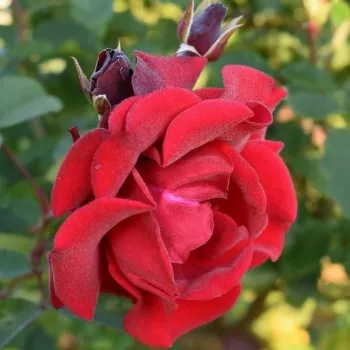
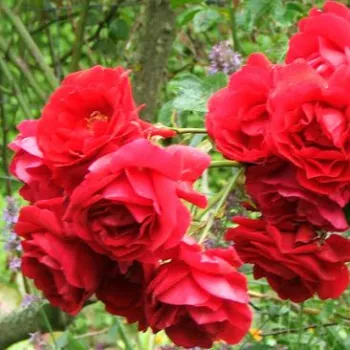
Semi-double, cup-shaped flowers with around 13–25 petals, produced mainly in clusters of medium-sized blooms. Repeats well after the first flush, giving a second abundant flowering period in suitable conditions. |
| Colour data and phenology |
Buds almost black with dark burgundy tones, opening to velvety deep red, then bright scarlet. Before petals fall, colour softens towards cherry red. Overall impression is a deep, glowing scarlet red throughout the season. |
| Fragrance and aroma |
Light, restrained rose scent with a delicate character, noticeable close to the blooms but not overpowering. Semi-double flowers with exposed stamens are moderately attractive to visiting pollinators in sunny weather. |
| Hip characteristics |
Produces moderately abundant, ovoid hips about 10–18 mm across in bright red (RHS 43A). Decorative late-season feature on less heavily deadheaded plants, adding extra autumn interest to trained structures. |
| Resistance and winter hardiness |
Hardy to approximately –21 to –18 °C (RHS H7, USDA 6b, Swedish zone 3). Disease resistance is medium for black spot, powdery mildew and rust; may need occasional treatments and good hygiene in humid regions. |
| Horticultural recommendations |
Best in full sun with fertile, well-drained soil; prefers regular watering in prolonged drought. Average maintenance: tie in new canes, prune for framework, deadhead for more flowers. Recommended spacings 140–230 cm. |
Reporter Climbing rose TANklesant brings repeat scarlet flowering, strong vertical structure and long-lived own-root reliability to everyday British gardens; a sound choice if you want a proven climber that simply settles in and performs.