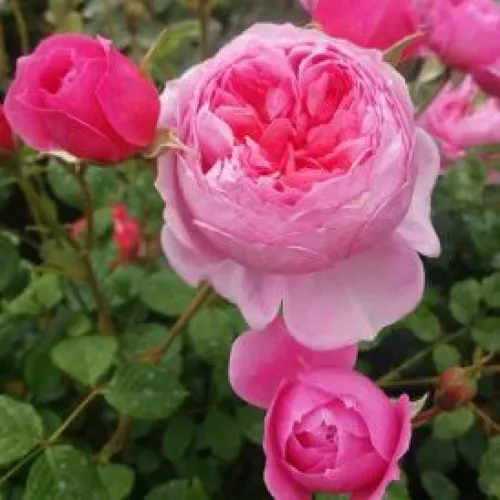
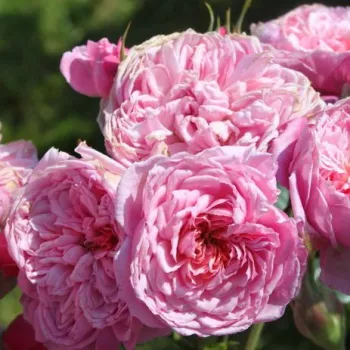
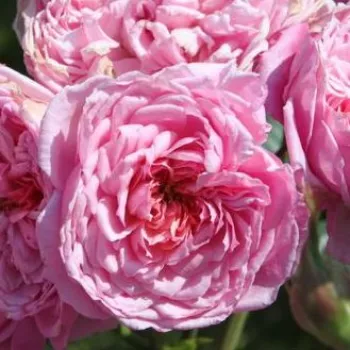
Petals in a delicate, soft pink hue with a subtly warm tone. The colour gradually lightens as the flower matures. - climbing rose, rambling rose - medium-strength, clearly scented rose - fresh, fruity aroma
– Romantische, zartrosa Pompon-Blütenpracht.
– Reiche erste und zweite Blütewelle.
– Dichtes, glänzend dunkelgrünes Laubkleid.
– Ideal zum Begrünen von Wänden und Pergolen.
– Angenehmer, frischer, fruchtiger Duft.
– Besonderheit: Bildet gelegentlich dekorative rote Hagebutten.
Unfortunately, we are currently unable to ship to the United Kingdom; we only deliver to countries within the European Union. For more information, please contact us!
3(3568)
PARC DE LA BELLE – pink climbing rose - Dittière
With its softly pink, pompon-like blooms and medium, fruity fragrance, PARC DE LA BELLE brings a classic cottage feel to small British gardens while remaining reassuringly manageable for those who prefer straightforward care. This own-root climber settles steadily over time, forming a dense, glossy curtain of foliage that clothes walls, arches and small pergolas without overpowering the space. In typical UK conditions it copes reliably with rain and wind in exposed or coastal spots, provided you give it well-prepared soil and basic care for diseases. Its remontant nature means the first season already brings attractive flushes of bloom, then as roots strengthen and shoots extend, the following years reveal its full decorative potential. Carefully spaced, it creates a long-lived vertical feature that fits effortlessly into traditional front gardens and relaxed cottage-style borders. The own-root form encourages a naturally balanced structure and easier long-term renewal, so you can keep the plant productive with simple, periodic pruning rather than complex reshaping.
Freshly opened mid-pink bloom of Parc de la Belle climbing rose.
Parc de la Belle in pale pink full bloom.
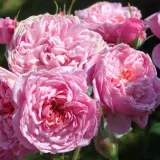
Parc de la Belle in several bloom stages, from bud to fully open flower.
Closed bud of Parc de la Belle climbing rose in mid-pink.
Usage options
Target area
Reasoning
Front garden house wall
Ideal for training against a sunny house wall where its moderate 170–260 cm height stays in scale with typical UK front gardens, giving soft pink colour and medium fragrance close to pathways; a good match for beginners.
Small pergola or arch
Its climbing habit and glossy foliage allow you to cover a compact pergola or entrance arch without excessive vigour, creating a romantic, pastel-toned passage that feels abundant yet controlled, well suited to busy owners.
Mixed cottage border backdrop
Used at the back of a cottage-style border, it forms a vertical backdrop of dark green leaves and pale pink blooms that combine naturally with perennials, supporting an informal look that still appears tidy for aesthetes.
Solitary specimen on a pillar
Planted as a single climber on an obelisk or pillar, its dense foliage and ball-shaped flowers create a strong focal point in smaller gardens while remaining easy to prune and refresh over time for planners.
Raised bed in heavier soil
In heavier or clay-based ground, a raised or well-drained bed lets roots establish steadily while the plant forms a stable, long-lived framework that stands up to typical British rain and wind in exposed plots for pragmatists.
Urban courtyard trellis
Its moderate spread and structured growth work well on trellis in compact courtyards, where repeat flowering and a neat habit deliver reliable visual impact without needing elaborate training, perfect for urbanites.
Large container near seating
Grown in a substantial 40–50 litre container with a support, it offers fragrant, eye-level blooms on patios or balconies, remaining moveable and manageable while still forming a durable framework that suits renters.
Informal hedging run
Planted in a loose line along a boundary, its climbing habit and dense foliage can be guided on low supports to create a soft, flowering screen that matures into a lasting, easily refreshed barrier appreciated by families.
Styling ideas
COTTAGE CURTAIN – Train along a low cottage wall with lavender and catmint at the base for a soft, drifting edge – ideal for lovers of traditional, romantic front gardens.
PASTEL PERGOLA – Combine on a pergola with white clematis and pale foxgloves to create a gentle pink-and-cream tunnel – suited to homeowners seeking a calm seating retreat.
COURTYARD COLUMN – Grow on a slim metal obelisk in a large pot with trailing thyme and violas – perfect for style-conscious urban gardeners with limited ground space.
STRUCTURED BORDER – Use as a vertical accent behind clipped box and soft grasses, tying classic roses into a more contemporary scheme – appealing to those who like ordered, low-fuss planting.
SOFT SCREEN – Guide along timber posts and wires with companion shrubs like rosemary and white liatris for a semi-transparent boundary – for families wanting privacy without feeling enclosed.
Technical cultivar profile
Parameter
Data
Name and registration
PARC DE LA BELLE – pink climbing rose - Dittière; large-flowered climbing rose, exhibition category climbing rose; current trade and ARS exhibition name: Parc de la Belle.
Origin and breeding
Bred by Jean-Pierre Dittière in France, 2005; introduced by Pépinières Jardirose and Pétales-de-Roses; parentage unknown; developed within the Roseraie Jardirose breeding programme.
Growth and structural characteristics
Climbing habit with dense, glossy dark green foliage; height around 170–260 cm, spread 70–110 cm; moderately thorny canes, suited to walls, arches, trellises and compact pergola structures.
Flower morphology
Large, double flowers with 26–39 petals, ball to pompon shaped, usually borne singly; remontant with abundant second flush; weak self-cleaning so spent blooms benefit from manual deadheading.
Colour data and phenology
Soft pink petals (RHS 65B outer, 65C inner) with a subtly warm tone; mid-pink buds open to pale pastel blooms that gradually lighten and gently fade in strong sunlight over the flowering period.
Fragrance and aroma
Medium-strength, clearly perceptible scent with a fresh, fruity character; fragrance noticeable around the plant, especially in still, warm conditions near seating or along frequently used paths.
Hip characteristics
Generally low hip production due to double blooms; occasionally forms small spherical red hips (RHS 45A), around 10–14 mm across, adding modest late-season ornamental interest where present.
Resistance and winter hardiness
Rated RHS H7, hardy to approximately −21 to −18 °C; tolerates heat and moderate drought once established; disease resistance relatively weak, with notable sensitivity to mildew and rust.
Horticultural recommendations
Prefers sunny sites with fertile, well-drained soil; recommended spacing 70–130 cm depending on use; best with regular feeding, watering and protective disease management in humid or high-pressure areas.
PARC DE LA BELLE offers repeat soft-pink bloom, a manageable climbing habit and a durable own-root framework; consider it if you want a graceful, long-lived feature without complex rose techniques.
Detailed product attributes
Product Identification Data
Product Name:
PARC DE LA BELLE – pink climbing rose - Dittière
Product Type:
pharmaROSA® ORIGINAL - 2-litre own-root potted rose
Pollinator Attraction:
Its highly double flower form makes it less attractive to pollinators because the stamens are largely obscured and therefore less accessible.
Pollinator-Friendly Rating:
Its double flowers partially cover the stamens, so its pollinator-friendliness is limited; primarily an ornamental variety.
Hip Comment:
Because of its double flowers, rose hip production is generally scant; it occasionally produces globular, red (RHS 45A) hips 10–14 mm in diameter.
Our product is a rose grown with pharmaROSA®’s unique cultivation technology!
2-litre, own-root, potted rose.
With a shoot system appropriate to the season.
With a root system that thoroughly permeates the growing medium.
Quality compliant with the requirements of the E.N.A. (European Nurserystock Association).
Supplied in unique packaging that prevents damage.
Can be planted during frost-free periods.
True-to-variety rose bush with a unique identifier.
The pharmaROSA® own-root potted rose is a well-rooted plant that supports reliable establishment when planted and cared for properly, so it can be planted whenever the soil is not frozen.
Crop overview: several varieties and growth stages in a short crop section.Shoot system: intensive growth of fresh basal shoots on a young plant.Root system: demonstration of a vigorous root system permeating the growing medium, by removing the pot.Balance: mature plant with root system and shoots in harmony with each other.
Information about the videos
The video series is not a “seasonal showcase”; it illustrates the essence of pharmaROSA® own-root cultivation in a tangible way: how the plant is built up, what the root system is like and how the shoot system regenerates. The recordings were therefore made at different times and with plants at various stages of development, so mixed foliage levels and differing stages of growth may appear in the videos. They are not a ‘sample’ of the batch dispatched, but a visual explanation of how the technology works. The current condition of the rose available to order — typical for the given period and similar to what you can expect to receive in the parcel — is shown in the upper part of the product page.
Pages for private customers Garden roses for the family garden, with minimal care → ORIGINAL® Premium garden roses – instant impact, a truly showpiece garden → EXTRA® Pages for professionals and private customers Roses for public spaces – large areas, sustainable maintenance → NATURAL® Roses for projects – hedge and row planting, fast implementation → RAPID® For professional partners only Production – propagation material for garden roses, wholesale → NEONATAL®
Company details
PharmaRosa Ltd. Company registration number: 01-09-717479 VAT number: 13075314-2-43 Plant health registration no.: HU130721 Bank account (IBAN): HU85117631891388688400000000 BIC (SWIFT): OTPVHUHB Bank name: OTP Bank Nyrt.