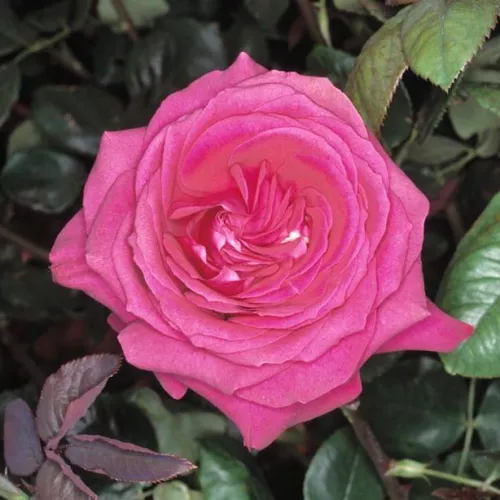
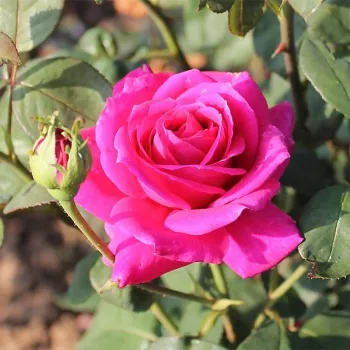
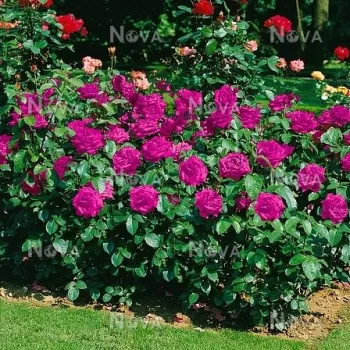
Flower in a lavender–mauve shade with a smoky violet-lilac rim that deepens towards the petal edges. - hybrid tea rose - strong, distinctly fragrant rose - rich, slightly sweet, rose-citrus, mildly fruity
– Large, exhibition-style blooms for cutting
– Rare mauve-lilac colour, fade-resistant
– Strong, rich rose-citrus fragrance
– Resistant to black spot, mildew and rust
– Reliable repeat flowering from summer on
– Special feature: Awarded Rose Hills Gold Medal for outstanding garden and show performance.
Style in the garden – Responsible gardening
pharmaROSA® ORIGINAL 2-litre own-root potted rose
21,20 £
Unfortunately, we are currently unable to ship to the United Kingdom; we only deliver to countries within the European Union. For more information, please contact us!
3(3663)
NEPTUNE – mauve-lilac hybrid tea rose – Tom Carruth
Bring a touch of refined elegance to your garden with NEPTUNE, a mauve-lilac hybrid tea rose bred by Tom Carruth for richly scented, exhibition-style blooms that still perform reliably in an everyday family setting. Its large, high-centred flowers combine cool lavender and smoky violet tones, delivering outstanding colour impact that remains fade-resistant even in strong sun. As a pharmaROSA® ORIGINAL own-root plant in a 2-litre pot, NEPTUNE is straightforward to establish: you plant it once and enjoy a long-lived bloom presence that matures steadily year by year. Ideal for beds, borders and feature spots in classic cottage or front gardens, it offers a practical balance of fragrance and form, with generally very good disease resistance that supports easy-care maintenance. Own-root growth means the bush adapts gradually to your soil and climate, building a stable, upright structure well anchored even where strong winds and wet weather can challenge roses near the house. Its strong stems also make it an appealing cut flower option, while partial-shade tolerance widens your planting choices in smaller British plots.
Neptune in full bloom, showing its mauve-lilac, high-centred flowers.
Usage options
Target area
Reasoning
Feature rose in a small front garden bed
NEPTUNE’s large, high-centred flowers and smoky mauve tones create an immediate focal point beside paths, gates or front doors, giving a well-kept look from a single bush without complex planting plans, ideal for the design-conscious beginner.
Classic cottage-style mixed border
Planted among perennials and shrubs, NEPTUNE’s repeat-flowering, fade-resistant blooms and bushy, upright habit hold their own visually, adding structure and continuity of colour that complements looser cottage plantings, appealing to lovers of classic gardens.
Small group planting (1–3 plants) in family gardens
A short row or triangular group at the recommended spacing gives generous flowering without overcrowding, while own-root development supports a long-lived, balanced stand that fits well into modest family plots, reassuring time-pressed homeowners.
Cutting patch or home cut-flower corner
With long, strong stems and exhibition-style buds, NEPTUNE provides impressive blooms for vases, combining rich colour and strong fragrance so you can bring garden character indoors, especially satisfying for creative, arrangement-minded gardeners.
Rose bed with simple, low-maintenance care
Good resistance to major fungal diseases and moderate drought tolerance mean that, with basic watering and feeding, NEPTUNE maintains healthy foliage and repeat bloom, reducing the need for intensive spraying, suiting environmentally aware, low-input gardeners.
Partially shaded side garden or near-house border
NEPTUNE flowers most freely in full sun yet still performs in light shade, making it suitable for side paths or near walls where light shifts through the day, a practical option for urban and suburban owners.
Large container on patio or terrace (40–50 litres+)
In a generously sized pot with good drainage and regular watering, NEPTUNE builds a compact, upright bush that showcases its scented blooms at close range, a refined solution for patios and hardstanding areas valued by small-space gardeners.
Weather-exposed front or corner position
Once established, the bushy, upright framework and own-root anchoring help NEPTUNE cope with blustery, rain-exposed spots, provided drainage is adequate even on heavier soils, offering confidence to coastal and weather-challenged garden owners.
Styling ideas
Coastal-classic – Combine NEPTUNE with Ceanothus and silver foliage shrubs in a drained bed to highlight its weather-tolerant structure – ideal for breezier, sea-influenced front gardens.
Cottage-duo – Underplant NEPTUNE with sweet alyssum and soft pink geraniums to frame its mauve blooms in a relaxed cottage style – perfect for romantic, small borders.
Evening-scent – Place NEPTUNE near a seating area with lavender and night-scented stocks so its strong fragrance and colour can be enjoyed at dusk – suited to patio-focused households.
Elegant-row – Plant a short line of NEPTUNE along a path or driveway for a formal yet easy-care flower display that doubles as a home cutting source – good for structured, tidy gardens.
Pot-theatre – Grow NEPTUNE in a 50-litre container with trailing sedums at the base to soften the pot while showcasing the blooms at eye level – ideal for paved courtyards and terraces.
Technical cultivar profile
Parameter
Data
Name and registration
Hybrid tea rose group; registered as WEKhilpurnil, marketed as NEPTUNE by Weeks Wholesale Rose Grower, Inc., hybrid tea exhibition and bedding rose for garden and cutting use.
Origin and breeding
Bred by Tom Carruth in the United States from (‘Blueberry Hill’ × ‘Stephen’s Big Purple’) × ‘Blue Nile’; introduced by Weeks in 2003 with later formal registrations in the USA and Australia.
Awards and recognition
Recipient of a Rose Hills Gold Medal at the Rose Hills International Rose Trials, Whittier, California, confirming strong garden and exhibition performance under trial conditions.
Growth and structural characteristics
Forms an upright, bushy shrub with moderately dense, glossy dark green foliage and moderate prickles; typically used as a specimen, in beds, low hedging or larger containers.
Flower morphology
Large, high-centred, pointed-budded hybrid tea blooms with 26–39 petals, double and exhibition-style, often borne 3–5 per stem, remontant with a notably abundant second flush.
Colour data and phenology
Lavender–mauve blooms with smoky violet-lilac rims; ARS MP, RHS 62C–62D; petals show good fade resistance, retaining cool tones and definition at the edges even in strong sunlight.
Fragrance and aroma
Strongly and distinctly scented; a rich, slightly sweet rose fragrance with citrus and gentle fruity facets, noticeable both on the plant and when used as a cut flower indoors.
Hip characteristics
Forms small hips around 5–10 mm in diameter; ornamental effect is minor and hips are rarely a primary design feature compared with the showy, recurrent flowering.
Resistance and winter hardiness
Classed as resistant to black spot, powdery mildew and rust; hardy to about −21 to −18 °C (RHS H6, USDA 6b, Swedish zone 3) with regular watering during extended summer droughts.
Horticultural recommendations
Best in full sun but tolerates partial shade; suitable for beds, specimen planting, hedging and large containers; plant 40–95 cm apart depending on use, with 2.6–2.9 plants/m² for massing.
NEPTUNE offers richly scented mauve-lilac blooms, reliable repeat flowering and a well-anchored own-root bush that settles in for long-term garden use, making it a thoughtful choice for those planning a lasting, elegant rose feature.
Detailed product attributes
Product Identification Data
Product Name:
NEPTUNE – mauve-lilac hybrid tea rose - Tom Carruth
Product Type:
pharmaROSA® ORIGINAL - 2-litre own-root potted rose
Competition and Show Awards:
Rose Hills International Rose Trials (Pageant of Roses Garden, Rose Hills, Whittier, USA) – Rose Hills Gold Medal (year unknown)
Flower Colour Description:
Flower in a lavender–mauve shade with a smoky violet-lilac rim that deepens towards the petal edges.
Closed Bud:
Pale pink-toned with a slight violet cast, with a delicate lilac flush on the outer bud leaves.
Newly Opened Flower:
The inner petal whorl is a clear, cool pink, with the petals showing a slightly deeper mauve tone at their bases. The outer petals fade to a pale pink towards their edges, sometimes overlaid with a soft violet veil.
Full Bloom:
When fully open the flower's ground colour is a cool lavender–mauve, with a more pronounced smoky violet rim at the petal edges; the petal bases are also lavender, with a narrow purple edging in places.
Before Fading:
The pink hue gently fades to a pastel mauve, with occasional light lavender tones. A subtle, slightly purplish-pink colouration becomes visible along the edges of the outer petals.
Colour Fading Description:
The petals are described as fade-resistant, so the lavender base colour and the purple edge remain relatively well preserved even in strong sunlight, with at most moderate lightening expected. (https://idiggreenacres.com/products/neptune-8482-rose?ut
Colour Retention Level:
The petals are described as fade‑resistant, so the lavender base colour and purple edge remain relatively well preserved even in strong sunlight; at most moderate lightening can be expected.
Pollinator Attraction:
Its large, very double flower form (30+ petals) means the stamens are only partially accessible, but the fragrant, showy blooms still attract bees, butterflies and other pollinators.
Pollinator-Friendly Rating:
Partially pollinator-friendly variety – its showy, strongly scented flowers attract pollinators, but because of its very double, exhibition-style flower form its provision of forage is limited.
Partial Shade Tolerance:
Suitable for partial shade (but flowers most abundantly in full sun).
Maintenance Requirement:
Maintenance requirement low–medium; disease resistance is generally very good according to major nurseries (especially against black spot and powdery mildew), although in humid, fungus-prone climates it may be medium, so occasional plant protection treatm
Primary Uses:
flowerbeds, specimen planting, exhibition rose and cut flower, container cultivation
Comments
Strengths:
Style in the garden – Responsible gardening
Our product is a rose grown with pharmaROSA®’s unique cultivation technology!
2-litre, own-root, potted rose.
With a shoot system appropriate to the season.
With a root system that thoroughly permeates the growing medium.
Quality compliant with the requirements of the E.N.A. (European Nurserystock Association).
Supplied in unique packaging that prevents damage.
Can be planted during frost-free periods.
True-to-variety rose bush with a unique identifier.
The pharmaROSA® own-root potted rose is a well-rooted plant that supports reliable establishment when planted and cared for properly, so it can be planted whenever the soil is not frozen.
Crop overview: several varieties and growth stages in a short crop section.Shoot system: intensive growth of fresh basal shoots on a young plant.Root system: demonstration of a vigorous root system permeating the growing medium, by removing the pot.Balance: mature plant with root system and shoots in harmony with each other.
Information about the videos
The video series is not a “seasonal showcase”; it illustrates the essence of pharmaROSA® own-root cultivation in a tangible way: how the plant is built up, what the root system is like and how the shoot system regenerates. The recordings were therefore made at different times and with plants at various stages of development, so mixed foliage levels and differing stages of growth may appear in the videos. They are not a ‘sample’ of the batch dispatched, but a visual explanation of how the technology works. The current condition of the rose available to order — typical for the given period and similar to what you can expect to receive in the parcel — is shown in the upper part of the product page.
Pages for private customers Garden roses for the family garden, with minimal care → ORIGINAL® Premium garden roses – instant impact, a truly showpiece garden → EXTRA® Pages for professionals and private customers Roses for public spaces – large areas, sustainable maintenance → NATURAL® Roses for projects – hedge and row planting, fast implementation → RAPID® For professional partners only Production – propagation material for garden roses, wholesale → NEONATAL®
Company details
PharmaRosa Ltd. Company registration number: 01-09-717479 VAT number: 13075314-2-43 Plant health registration no.: HU130721 Bank account (IBAN): HU85117631891388688400000000 BIC (SWIFT): OTPVHUHB Bank name: OTP Bank Nyrt.