FRÜHLINGSGOLD® – yellow wild rose – Kordes
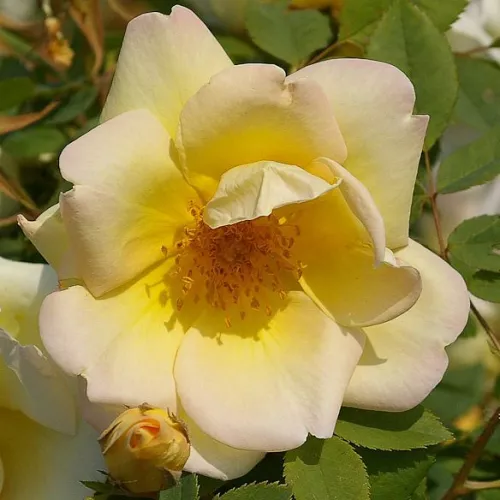
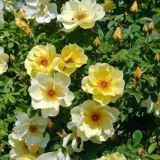
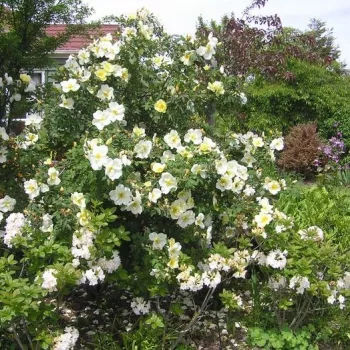
Cottage charm and natural hedge structure come together in this classic shrub, producing a cloud of soft primrose-yellow blooms in late spring that draw in bees and other pollinators. As an own-root plant, it develops steadily into a long-lived framework, maturing from root-building in the first year to fuller top growth in the second and a convincing ornamental presence by the third. Its upright, arching habit gives reliable screening and a sense of established structure even in smaller family plots, while its hardy constitution copes well with brisk, damp British weather and exposed sites where strong winds and heavy rain would challenge fussier roses. Once flowering, the simple, fragrant flowers fall cleanly, followed by dark, decorative hips that support wildlife interest into autumn. Planting is straightforward: give it a reasonably sunny spot, basic care and room to grow, and you can enjoy a low-maintenance, informal rose that fits beautifully into mixed borders and relaxed front-garden schemes, with a natural feeling of seasonal abundance.
Usage options
| Target area |
Reasoning |
| Front garden focal shrub |
Planted near the boundary or beside a path, this tall, arching shrub creates a single, eye-catching focus that flowers reliably in late spring without demanding constant attention, offering a relaxed, welcoming look ideal for beginners. |
| Informal flowering hedge |
With its upright habit, moderate prickles and dense foliage, it forms a soft, living screen along drives or boundaries, giving privacy and seasonal colour while needing only occasional shaping cuts, suiting those who want simple, effective structure for family-garden. |
| Cottage-style mixed border |
Use as a back-of-border anchor among perennials and smaller shrubs; its once-a-year mass of soft yellow flowers and clean drop of spent blooms keep the display tidy, leaving space for summer plants to shine, appealing to lovers of classic cottage. |
| Wildlife-friendly corner |
The open, pollen-rich flowers and later dark hips support bees and birds, combining ornamental value with habitat in a small garden wildlife strip, for gardeners who want nature-friendly planting without complex management, especially pollinator-conscious. |
| Low-intervention family area backdrop |
As a robust, long-lived shrub, it settles into its spot and improves with age, needing only basic pruning every few years, making it a good choice behind play areas or lawns where long-term stability matters to busy householders. |
| Coastal or exposed site planting |
Its proven hardiness and tolerance of brisk, wet weather make it suitable for more exposed gardens where wind and heavy rain can quickly spoil more delicate roses, giving reliable structure and spring colour for practical-minded coastal. |
| Large container on patio or terrace |
In a very large pot of at least 40–50 litres, it can be grown as a statement shrub on a terrace, where its single flush of blooms and modest ongoing care keep container maintenance manageable for time-pressed urban patio-owners. |
| Naturalistic or meadow-style planting strip |
Set into a looser grass or meadow-style area, it reads as a graceful, lightly managed wild shrub; its once-a-year flower show and self-cleaning blooms fit low-mow areas, ideal for those favouring informal, nature-led design-lovers. |
Styling ideas
- COTTAGE FRONT EDGE – Position near a picket fence with catmint and hardy geraniums to echo traditional village gardens – ideal for lovers of timeless, romantic approaches.
- NATURAL HEDGE – Alternate with hawthorn or field maple for a soft, species-rich boundary that flowers and berries for wildlife – suited to gardeners seeking gentle screening.
- YELLOW HARMONY – Combine with creamy roses and pale-leaved perennials so the spring yellow reads as a gentle highlight rather than a strong block – for those favouring subtle, co-ordinated palettes.
- URBAN PATIO FOCUS – Grow in a substantial container with low groundcover such as Euonymus or Heuchera at the base – perfect for small-plot owners wanting impact from one shrub.
- WILDLIFE CORNER – Plant with nectar-rich perennials and leave autumn hips for birds to enjoy – attractive to gardeners who want ornamental value with ecological benefits.
Technical cultivar profile
| Characteristic |
Data |
| Name and registration |
FRÜHLINGSGOLD® shrub rose; Botanical rose collection; wild rose commercial type; ARS exhibition name ‘Fruhlingsgold’; current trade name Frühlingsgold® Botanical rose Kordes. |
| Origin and breeding |
Bred by Wilhelm J. H. Kordes II in Germany (1937); parentage ‘Joanna Hill’ × Rosa spinosissima var. hispida; introduced by W. Kordes’ Söhne in 1951 in Germany and the United Kingdom. |
| Awards and recognition |
Holds the Royal Horticultural Society Award of Garden Merit (1993), confirming good garden performance, reliability and general ornamental value under typical British growing conditions. |
| Growth and structural characteristics |
Vigorous upright shrub, 180–280 cm high and 150–250 cm wide, with dense, mid-green, slightly glossy foliage and moderate prickles; self-cleaning is medium, most spent blooms dropping naturally. |
| Flower morphology |
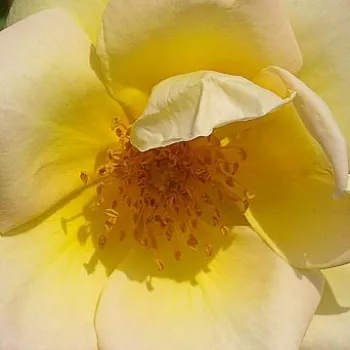
Single, flat flowers with 5–12 petals, large size (about 7–10 cm across), usually borne in clusters; once-flowering, producing a generous main flush in late spring to early summer without repeat. |
| Colour data and phenology |
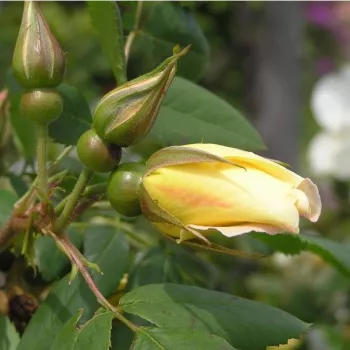
Soft primrose-yellow blooms (RHS 4B outer, 4D inner) with deeper yellow buds; colour lightens in strong sun to creamy yellow tones; ARS ly code; overall effect is pastel yellow that softens as flowers age. |
| Fragrance and aroma |
Clean, musky fragrance of medium strength, clearly perceptible around the shrub; scent complements its natural look, contributing to a traditional garden atmosphere without being overpowering. |
| Hip characteristics |
Produces moderate quantities of small spherical hips, approximately 10–15 mm in diameter, in a dark burgundy to almost black shade; hips add wildlife and seasonal interest into autumn. |
| Resistance and winter hardiness |
Rated RHS H7; hardy approximately to –32 to –29 °C (USDA 4b, Swedish zone 5); tolerates heat and moderate drought; disease resistance moderate for common foliar issues like black spot, mildew and rust. |
| Horticultural recommendations |
Best in full sun with well-drained soil; medium maintenance with occasional disease checks; typical spacing 135–230 cm depending on hedge or specimen use, allowing for its mature spread and height. |
FRÜHLINGSGOLD® offers natural spring colour, wildlife-friendly flowers and hips, and a durable own-root framework that settles in for decades, making it a considered choice for relaxed, long-term planting.