FRAU KARL DRUSCHKI – white historic perpetual hybrid rose - Lambert
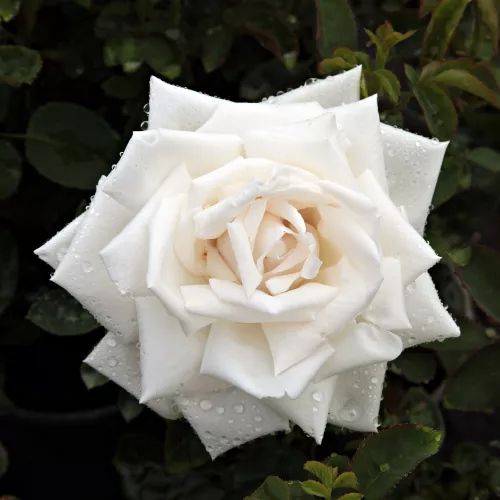
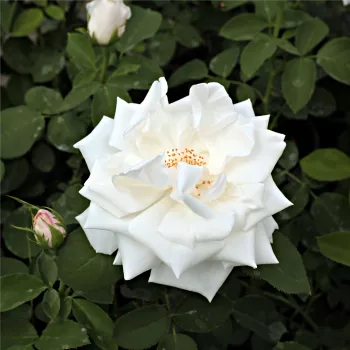
This classic hybrid perpetual rose offers timeless white blooms and a statuesque presence that suit traditional British front gardens and calm, ordered cottage borders. Large, pure-white flowers appear in summer with a softly sweet fragrance, ideal for cutting and displaying indoors. As an own-root shrub it develops a durable, balanced framework that supports a notably long garden lifespan, rewarding steady care over many years. Its upright, dense habit forms a strong visual anchor in beds and small park-style plantings, while the snow-white flowers remain clear and bright without yellowing. In cooler, moist UK summers it performs particularly well, coping reliably even where soil stays heavy and needs thoughtful drainage management. With proper moisture and nutrition the plant matures steadily from root establishment to a full, impressive display over its first three seasons, becoming a reliable structural feature in your garden.
Usage options
| Target area |
Reasoning |
| Formal front-garden specimen |
Planted as a single specimen near the entrance, its upright, dense growth and large white blooms create a dignified focal point that suits symmetrical, orderly front gardens; ideal for homeowners who value classic structure and clear form, especially beginners. |
| Cottage-style mixed border |
In a mixed border with perennials, its pure snow-white flowers provide a calm, neutral foil for softer pinks, blues and silvers, slotting naturally into cottage-style compositions without visual clutter, ideal for aesthetes who prefer gentle romance and colour. |
| Small group planting (1–3 shrubs) |
Group planting at recommended distances creates a broad, coherent mass of white bloom that reads as one feature from the street, while remaining simple to prune and maintain, suiting busy households wanting maximum effect from limited effort. |
| Traditional rose bed in family gardens |
Within a dedicated rose bed, its historic character and robust framework offer long-term presence; once established it mainly needs seasonal feeding, watering in dry spells and basic deadheading, fitting gardeners who seek enduring structure with moderate care. |
| Cutting corner for indoor vases |
Its very large, double, pure-white blooms on strong stems are well suited for cutting, so a small “cutting corner” can supply elegant vase flowers without spoiling the overall display, appreciated by those who enjoy bringing garden beauty indoors for decor. |
| Park-style back lawn focal shrub |
Set alone or in a loose trio at the edge of a lawn, its height and upright build give park-like elegance while remaining readable from a distance, well suited to family lawns where a single strong feature is easier to manage than complex plantings. |
| Lightly structured hedge or row |
Planted in a line at hedge spacing, the tall, thorny, densely foliaged plants form a semi-formal, seasonally flowering screen that subtly marks boundaries yet stays more ornamental than a clipped hedge, appealing to those balancing privacy with visual charm. |
| Raised bed on heavier soils |
In raised beds or improved borders on heavier clay, the well-rooted own-root plants establish securely and anchor themselves long term, benefitting from conditions that avoid prolonged saturation and poor air around the roots, reassuring cautious gardeners. |
Styling ideas
- COTTAGE WHITE ANCHOR – Combine with soft pink bee balm and lamb’s ear to frame the rose as a luminous central anchor in a relaxed border – ideal for cottage-garden lovers seeking calm structure.
- FORMAL ENTRANCE PAIR – Plant two shrubs flanking a path, underplanted with low aubrieta for spring colour and a white summer statement – suited to homeowners wanting a smart but manageable front approach.
- PARK-EDGE FEATURE – Use a single tall shrub at the corner of a back lawn, with simple green hedging behind, to echo classic park plantings – for families who want elegance without complex maintenance.
- QUIET CUTTING CORNER – Place one or two plants near a patio with easy access for cutting, backed by plain evergreens so the white blooms dominate – for those who like bringing understated, home-grown bouquets indoors.
- SOFT SCREEN ROW – Create a loose line along a boundary, interspersed with airy perennials, for a seasonal white screen that feels lighter than a solid hedge – fitting for small gardens needing privacy with openness.
Technical cultivar profile
| Property |
Data |
| Name and registration |
Frau Karl Druschki, historical hybrid perpetual / hybrid tea rose; unregistered cultivar name, heritage collection type, originally classified for exhibition and cut-flower use. |
| Origin and breeding |
Bred by Peter Lambert in Trier, Germany, introduced in 1901 from the cross ‘Merveille de Lyon’ × ‘Madame Caroline Testout’, representing an early twentieth-century hybrid perpetual lineage. |
| Awards and recognition |
Awarded a National Rose Society Gold Medal in the United Kingdom circa 1907 as best hybrid perpetual rose, confirming its historic status and strong ornamental value in traditional rose circles. |
| Growth and structural characteristics |
Upright shrub 140–190 cm high, 100–160 cm wide, densely thorned with abundant, slightly glossy foliage; forms a substantial, structural bush best suited to open, sunny positions in the garden. |
| Flower morphology |
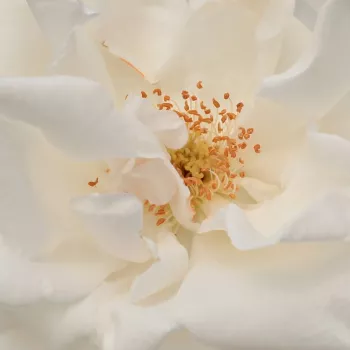
Very large, double, cup-shaped blooms with 26–39 petals, carried mainly singly on stems; non-remontant habit with one main flowering period, giving a concentrated summer display ideal for feature planting. |
| Colour data and phenology |
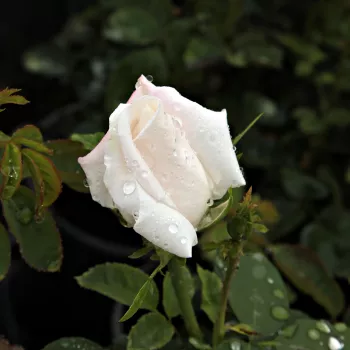
Pure snow-white flowers (ARS W; RHS 155C outer, 155D inner) with excellent colour stability; petals do not yellow, though buds may remain closed in extended wet weather, maintaining a cool, neutral white effect. |
| Fragrance and aroma |
Softly sweet, restrained fragrance typical of many historic hybrid perpetual roses; perceptible at close range without overwhelming nearby seating or windows, suiting users who prefer a gentle rather than intense scent. |
| Hip characteristics |
If deadheading is omitted, occasional small, dark red, spherical hips 10–15 mm across may develop, offering modest late-season interest but not produced in heavy quantities under regular garden maintenance. |
| Resistance and winter hardiness |
Hardy to about −32 to −29 °C (RHS H7; USDA 4b, Swedish zone 5); good resistance to powdery mildew and black spot, medium susceptibility to rust, best performance in cooler summers with adequate moisture. |
| Horticultural recommendations |
Prefers full sun and fertile, well-drained soil; spacing 110–200 cm depending on use; medium maintenance with occasional pest and disease checks and manual removal of spent blooms to keep plants tidy. |
Frau Karl Druschki offers pure white, XL blooms, an upright, structural habit and a long-lived own-root framework that rewards steady care over many seasons, making it a thoughtful choice for gardeners planning a lasting feature.