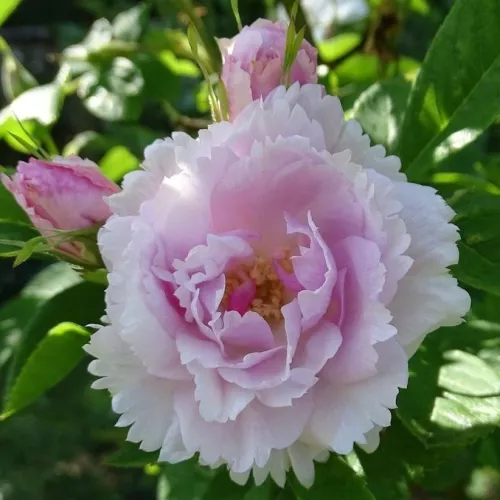
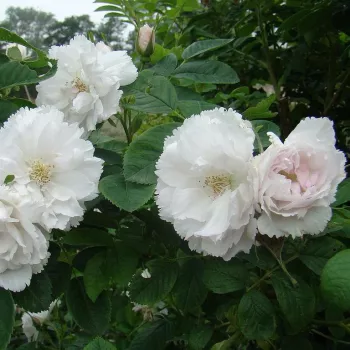
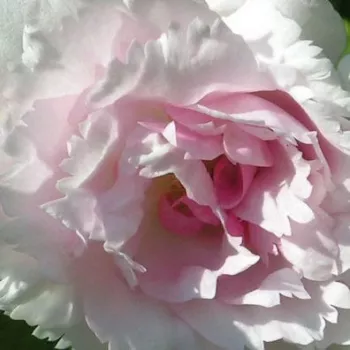
Pastel, pale pink shade leaning almost to white. - historical, old garden rose - medium-strength, well-scented rose - softly sweet aroma
– Softly fringed pastel blooms, delicately romantic.
– Medium, sweet fragrance with classic charm.
– Robust shrub with dense, bushy growth.
– Excellent disease and drought resistance.
– Very hardy, tolerates severe winter cold.
– Special feature: Historical Hybrid Rugosa from 1891, ideal for naturalistic, low‑care plantings.
Ongoing garden development – Future-friendly garden selection
pharmaROSA® ORIGINAL 2-litre own-root potted rose
19,30 £
Unfortunately, we are currently unable to ship to the United Kingdom; we only deliver to countries within the European Union. For more information, please contact us!
3(4572)
Fimbriata – pale pink historic old garden rose – Morlet
This historical Hybrid Rugosa brings together heritage charm and modern reliability, creating a bushy, upright shrub that thrives in typical British conditions where good drainage helps on heavier soils in wet spells. Its pastel, almost white-leaning pink blooms have delicately fringed petals and a medium, softly sweet fragrance, opening semi-double to reveal stamens that are especially inviting to bees. Naturally drought-tolerant and highly disease-resistant, it settles into the garden with minimal intervention and is well suited to low-input, family landscapes. As an own-root shrub it offers impressive longevity, rebuilding from its base over time and keeping a stable outline. Plant once and enjoy a shrub that develops steadily – roots in year one, strong shoots in year two, and full ornamental presence by year three – ideal where maintenance time is limited but you still want a graceful, classic effect.
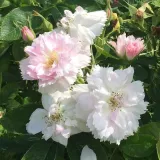
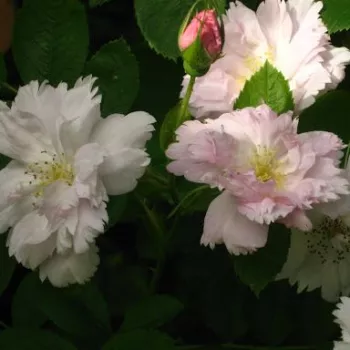
Fimbriata shows flat, semi-double pale pink blooms.
Fimbriata rose stem with dense thorns
Usage options
Target area
Reasoning
Front garden feature shrub
The upright, bushy habit and 120–190 cm height make this rose a natural focal point near an entrance or front window, giving gentle structure without overwhelming smaller plots and creating a welcoming look for style-conscious beginners.
Low-maintenance mixed border
Good drought tolerance, low feeding needs and minimal pruning requirements suit busy gardeners who prefer simple seasonal tidy-ups; the shrub’s dense foliage fills gaps and keeps borders looking complete with very little ongoing attention for beginners.
Informal cottage-style grouping (1–3 plants)
Pastel, fading-to-white blooms blend easily with perennials and traditional cottage choices, while the historical character adds authenticity; loose clusters of flowers through the season create a relaxed, storybook feel for cottage-garden lovers.
Lightly formal hedge or boundary line
Recommended spacings around 90–100 cm allow you to build a low, flowered barrier that is dense enough to define a boundary; once established, it copes well with basic trimming rather than technical rose pruning, which suits homeowners.
Pollinator-friendly rose corner
Semi-double flowers with exposed stamens make nectar and pollen easy for bees to reach, while successive flushes keep interest going; a small group of plants quickly becomes a gentle feeding station ideal for wildlife-aware gardeners.
Sunny, poorer-soil planting
This rugosa hybrid is noted for performing well in poorer, drier soils, so it is a sensible choice where deep improvement is impractical, providing colour and foliage where fussier roses struggle, which reassures time-pressed beginners.
Classic park-style specimen in lawn
At up to around 190 cm and with a broad spread, one well-placed plant reads as a small flowering shrub; its historical background and scented summer display echo traditional park plantings, appealing to romantically minded gardeners.
Weather-resilient family garden rose bed
High resistance to common fungal problems and strong winter hardiness mean this rose copes well with UK humidity and cold snaps, reducing the need for sprays and complex regimes – a calm, robust option for cautious new rose-owners.
Styling ideas
Cottage-curve border – Line a softly winding front path with 2–3 shrubs, underplant with low perennials and bulbs for a classic cottage welcome – ideal for style-focused beginners.
Pastel pairing – Combine with white and pale lilac perennials to echo its soft pink, creating a calm, airy palette for small urban gardens.
Wildlife nook – Group it with bee-friendly perennials and allow hips to develop, forming a gentle wildlife corner for nature-conscious families.
Lawn specimen – Place a single shrub in a circular bed within lawn for a simple, traditional focal point that reads well from windows and terraces.
Informal hedge – Plant a loose row along a drive or boundary, mixing with other historic roses to create a fragrant, story-rich screen for cottage-style plots.
Technical cultivar profile
Characteristic
Data
Name and registration
Hybrid Rugosa historical shrub rose marketed as Fimbriata (Heritage rose, Morlet); unregistered cultivar with classic exhibition status as a shrub rose in heritage collections.
Origin and breeding
Bred by Morlet in France from Rosa rugosa × ‘Madame Alfred Carrière’, introduced 1891; a long-proven, old garden rose with over a century of garden performance.
Growth and structural characteristics
Bushy, upright shrub reaching about 120–190 cm high and 90–150 cm wide, densely foliated with matte, mid-green leaves and plentiful prickles, forming a substantial, anchoring garden presence.
Flower morphology
Semi-double, flat blooms in medium size, carried in clusters; roughly 13–25 petals with softly fringed edges, producing a gently informal, ruffled flower form well suited to relaxed plantings.
Colour data and phenology
Pale pastel pink (RHS 65C outer, 65D inner) that fades almost to white with age; newly opened flowers show powdery pink tones and the shrub repeats after its main flush with lighter secondary flowering.
Fragrance and aroma
Medium-strength, softly sweet scent typical of rugosa heritage roses; noticeable on still, warm days without being overpowering, contributing to a traditional, romantic garden atmosphere.
Hip characteristics
Produces moderate quantities of spherical red-orange hips, around 19–31 mm in diameter, developing in autumn and adding seasonal colour and wildlife interest when left on the plant.
Resistance and winter hardiness
Very good resistance to powdery mildew, black spot and rust; hardy to about −32 to −29 °C (RHS H7, USDA 4b, Swedish zone 5), offering secure performance in exposed or colder British sites.
Horticultural recommendations
Best in sunny positions with reasonable drainage; low pruning and feeding needs suit relaxed maintenance. Plant about 90–100 cm apart in hedges or 1 per m² in borders for even coverage.
Fimbriata offers softly fringed, pale pink blooms, strong disease and drought resilience, and long-lived own-root reliability, making it a thoughtful choice if you value enduring, low-effort beauty in your garden.
Detailed product attributes
Product Identification Data
Product Name:
FIMBRIATA – pale pink historic old garden rose - Morlet
Product Type:
pharmaROSA® ORIGINAL - 2-litre own-root potted rose
Pollinator Attraction:
Semi-double, fringed-petal blooms with exposed stamens are particularly attractive to bees, because the semi-double flower form and the easy accessibility of the stamens make nectar and pollen easier for pollinators to reach.
Pollinator-Friendly Rating:
Because of its semi-double blooms, it is considered partially pollinator-friendly.
Our product is a rose grown with pharmaROSA®’s unique cultivation technology!
2-litre, own-root, potted rose.
With a shoot system appropriate to the season.
With a root system that thoroughly permeates the growing medium.
Quality compliant with the requirements of the E.N.A. (European Nurserystock Association).
Supplied in unique packaging that prevents damage.
Can be planted during frost-free periods.
True-to-variety rose bush with a unique identifier.
The pharmaROSA® own-root potted rose is a well-rooted plant that supports reliable establishment when planted and cared for properly, so it can be planted whenever the soil is not frozen.
Crop overview: several varieties and growth stages in a short crop section.Shoot system: intensive growth of fresh basal shoots on a young plant.Root system: demonstration of a vigorous root system permeating the growing medium, by removing the pot.Balance: mature plant with root system and shoots in harmony with each other.
Information about the videos
The video series is not a “seasonal showcase”; it illustrates the essence of pharmaROSA® own-root cultivation in a tangible way: how the plant is built up, what the root system is like and how the shoot system regenerates. The recordings were therefore made at different times and with plants at various stages of development, so mixed foliage levels and differing stages of growth may appear in the videos. They are not a ‘sample’ of the batch dispatched, but a visual explanation of how the technology works. The current condition of the rose available to order — typical for the given period and similar to what you can expect to receive in the parcel — is shown in the upper part of the product page.
Pages for private customers Garden roses for the family garden, with minimal care → ORIGINAL® Premium garden roses – instant impact, a truly showpiece garden → EXTRA® Pages for professionals and private customers Roses for public spaces – large areas, sustainable maintenance → NATURAL® Roses for projects – hedge and row planting, fast implementation → RAPID® For professional partners only Production – propagation material for garden roses, wholesale → NEONATAL®
Company details
PharmaRosa Ltd. Company registration number: 01-09-717479 VAT number: 13075314-2-43 Plant health registration no.: HU130721 Bank account (IBAN): HU85117631891388688400000000 BIC (SWIFT): OTPVHUHB Bank name: OTP Bank Nyrt.