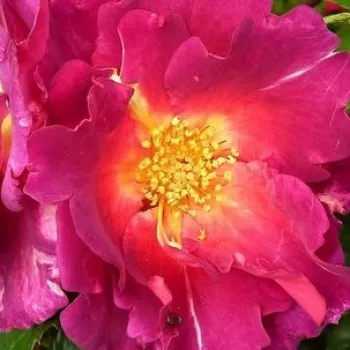
Wild Rover – deep purple park rose – Dickson
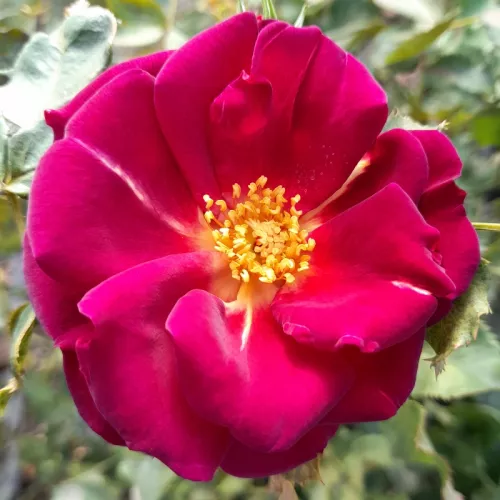
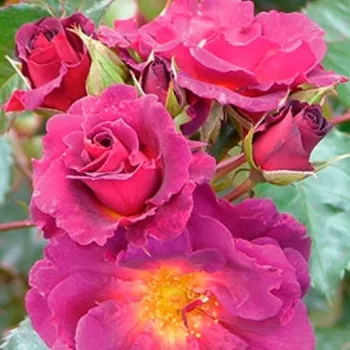
This upright shrub rose brings a wild yet tidy note to classic British front gardens, flowering reliably with clusters of deep purple blooms that keep their colour even in unsettled weather. Its remontant habit gives generous repeat flowering, while a strong, sweet‑spicy fragrance adds character around paths, terraces and front doors. Own‑root planting supports long‑term stability and regeneration, forming a dense, leafy hedge or specimen that matures steadily in ordinary family gardens with simple, once‑a‑year pruning. Over time it builds a balanced shrub, in a natural rhythm of Year 1 roots, Year 2 shoots, Year 3 full ornamental value, adapting well to everyday care routines and coping reliably with blustery, rain‑laden coastal conditions where many roses struggle.
Usage options
| Target area | Reasoning |
|---|
| Front‑garden focal shrub |
Its upright, dense habit and 120–180 cm height make Wild Rover an easy choice for a statement shrub by the front door or along a path, giving structure without complicated shaping; ideal for those wanting impact from a single, reliable shrub rose for busy beginners |
| Small group planting (1–3 plants) in beds |
Planted in a loose triangle or short drift, the rich crimson‑purple flowers create a deep colour block that sits beautifully with cottage perennials, while own‑root growth gives long‑term balance and shape with straightforward annual pruning for style‑focused homeowners |
| Informal flowering hedge (row planting) |
At 90–100 cm spacing, it forms an informal, flowering screen with light green, slightly glossy foliage that hides boundaries and bin areas, while moderate maintenance needs keep tasks manageable for those who want a soft barrier of blooms for family gardens |
| Mixed cottage border with perennials |
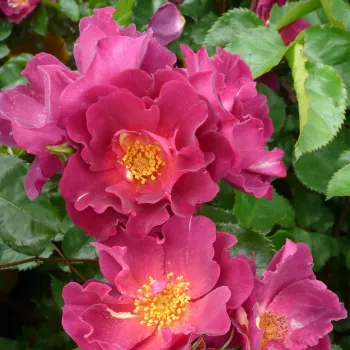
Semi‑double, cluster‑flowered blooms weave naturally among geraniums and light shrubs, and the strong fragrance adds another layer of interest, giving a near‑natural effect that suits relaxed cottage schemes without demanding intricate pruning from cottage‑garden lovers |
| Specimen rose near seating areas |
The strong, long‑lasting scent and repeat flowering make it particularly effective beside benches or patios, where the colour and perfume can be enjoyed up close with just occasional deadheading, suiting those who value atmosphere over constant gardening for urban relaxers |
| Rose for partially shaded spots |
Its suitability for partial shade allows you to use those less‑sunny side borders or north‑east aspects, still gaining reliable flowering without the need to redesign the whole garden layout, an advantage where aspect and space are limited for townhouse owners |
| Large container on terrace or driveway |
In a substantial 40–50 litre pot with good drainage, Wild Rover becomes a movable feature for paved areas, its upright habit and repeat blooms offering colour where borders are scarce, fitting well into low‑maintenance, hard‑landscaped spaces for balcony‑and‑patio gardeners |
| Exposed or coastal family gardens |
This shrub rose copes well with blustery, wet conditions that challenge many varieties, holding colour and flower quality even in changeable summers, making it a sound choice where salt‑tinged winds and frequent rain are part of everyday life for coastal homeowners |
Styling ideas
- Cottage Contrast – combine Wild Rover with Geranium ‘Rozanne’ and soft grasses to let its deep purple clusters shine against airy blues and greens – ideal for cottage‑style front gardens seeking relaxed colour.
- Elegant Screen – plant a loose row along a low fence, underplant with lavender or nepeta to soften edges and echo the fragrance – suited to homeowners wanting a simple, flowering boundary.
- Doorstep Welcome – use a single shrub in a 50‑litre container flanking the front door, paired with evergreen box or bay for year‑round form – perfect for busy urban gardeners wanting instant entrance impact.
- Evening Seating – position a specimen near a bench with pale companion flowers such as white campanula, so scent and colour stand out at dusk – for those who enjoy quiet evenings outdoors without heavy upkeep.
- Structured Border – repeat groups of Wild Rover through a mixed border to give rhythm and height among perennials and small shrubs – ideal for design‑conscious gardeners seeking order with manageable care.
Technical cultivar profile
| Characteristic | Data |
|---|
| Name and registration |
Wild Rover (Registered as DIChirap) is a park–shrub rose, exhibition floribunda / shrub category; American Rose Society exhibition name Harry Potter, verified premium gold quality for garden use. |
| Origin and breeding |
Bred by Colin Dickson, Dickson Nurseries Ltd, New Ireland, Great Britain, from ‘Spice of Life’ × ‘Rhapsody in Blue’; introduced and registered in the United Kingdom in 2007. |
| Awards and recognition |
RHS Award of Garden Merit (2012), Certificate of Merit at the Glasgow Rose Trials (2010), and Silver Medal at the International Rose Competition, Viña del Mar, Chile, highlighting proven garden performance. |
| Growth and structural characteristics |
Upright shrub 120–180 cm high, 75–125 cm spread, moderately thorny, with dense, slightly glossy light‑green foliage; moderate self‑cleaning, some spent blooms may need occasional removal by hand. |
| Flower morphology |
Semi‑double, medium‑sized 4–7 cm flat blooms, typically borne in clusters; 13–25 petals, reliably remontant with a second flush comparable in abundance to the first, suitable for cutting. |
| Colour data and phenology |
Deep crimson‑purple base tone with subtle mauve hue; dark burgundy‑purple buds open to purple blooms with golden stamens, then fade towards mauve‑lilac, edges softening to pastel lilac without scorching. |
| Fragrance and aroma |
Strong, long‑lasting sweet and spicy fragrance that carries well around paths and seating areas; attractive as a scented garden shrub, though not specifically selected for cosmetic or soap production. |
| Hip characteristics |
Occasional small spherical hips 8–13 mm in diameter, red RHS 40A; decorative in late season but generally modest, so they do not significantly alter the shrub’s overall ornamental appearance. |
| Resistance and winter hardiness |
Hardy to approximately −21 to −18 °C (RHS H7, Swedish Zone 3, USDA 6b) with moderate resistance to black spot, powdery mildew and rust; needs watering during extended dry, hot spells. |
| Horticultural recommendations |
Best in well‑drained soil with regular feeding and moderate pruning; suitable for beds, hedging, urban green spaces and as a cut flower, thriving at 90–100 cm spacing or as a 180 cm specimen shrub. |
Wild Rover offers rich purple colour, repeat flowering and strong fragrance in an own-root shrub that settles for the long term, making it a thoughtful choice if you want a characterful yet manageable rose in your garden.