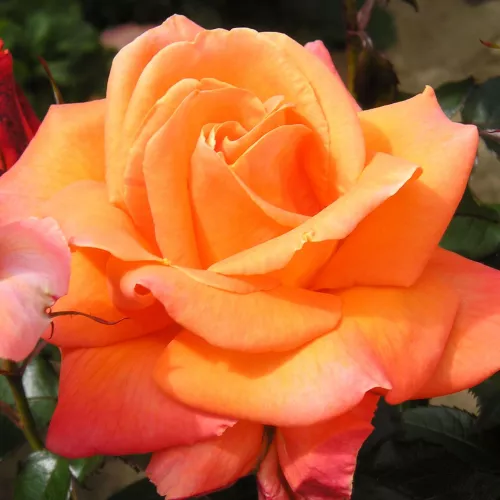
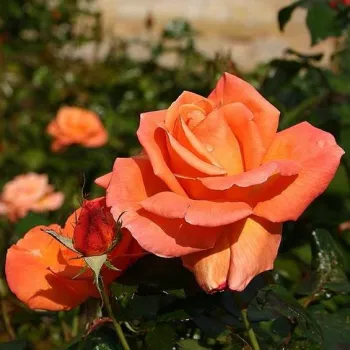
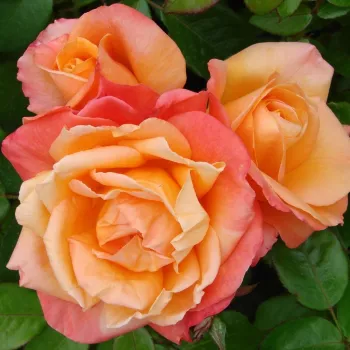
Pure, homogeneous milky-white shade with no cool undertones. - park rose - scentless rose - no noticeable fragrance
– Dazzling, pure white clusters all summer.
– Strong upright shrub for borders and parks.
– Good heat and moderate drought tolerance.
– Moderately thorny canes, easier maintenance.
– Compact size suits hedges and mass planting.
– Special feature: Occasionally forms decorative red hips after flowering.
Water-wise – Future-proof garden concept
pharmaROSA® ORIGINAL 2-litre own-root potted rose
19,70 £
Unfortunately, we are currently unable to ship to the United Kingdom; we only deliver to countries within the European Union. For more information, please contact us!
3.5(5851)
NEIGE D'ÉTÉ – white park rose – Lens
Snowy summer borders come easily with Neige d'Été, a tall, upright shrub rose that clothes itself in clouds of small, double white blooms from early season, then repeats generously later for a reliably remontant display. Its dark, slightly glossy foliage sets off the milky-white flowers beautifully, creating a refined yet relaxed look that suits traditional front gardens and informal cottage-style mixes. Growing on its own roots, this rose establishes steadily for a long-lived, dependable structure, coping well even where soil stays heavier and needs thoughtful drainage after rain. Once settled, its good tolerance of heat and moderate drought makes it a genuinely water-wise choice for busy gardeners who cannot constantly irrigate. With relatively sparse thorns it is easier to handle and to place near paths or seating, while moderate maintenance needs mean you can focus on simple pruning rather than complex plant protection. Over the first years it strengthens gradually – building roots in year one, more shoots in year two, and a full ornamental display by about year three – so it grows into your garden with quiet confidence.
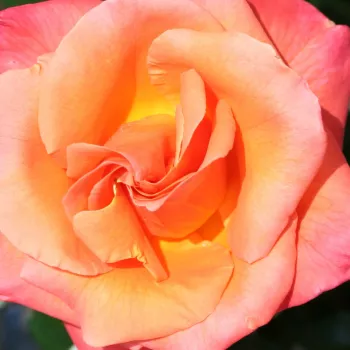
Inner flower structure of Neige d'Été, showing the pale stamens.
Closed bud of Neige d'Été, showing opalescent white petals with a slight greenish tinge.
Usage options
Target area
Reasoning
Front-garden focal shrub
The upright, moderately tall habit and dark foliage give a clear vertical accent that reads well from the street without overwhelming smaller plots. Clusters of pure white flowers provide a calm, tidy look that suits classic British front gardens and simple layouts valued by beginners.
Small group in cottage-style border
Planted in groups of three to five at the recommended spacing, the airy clusters of small white blooms echo traditional hybrid musk plantings, blending naturally with perennials and grasses. The remontant flowering offers season-long continuity appreciated by homeowners.
Low-maintenance family garden backbone
Once established, its good tolerance of heat and moderate drought means fewer watering worries during drier spells, supporting a “set and enjoy” approach. As an own-root shrub, it forms a stable bush that regenerates well after pruning, reassuring time-pressed gardeners.
Informal flowering hedge
At around 120–170 cm high with a generous spread, repeated along a boundary it creates a soft, semi-transparent screen of white flowers and green foliage. Moderate maintenance and sparse thorns make seasonal trimming manageable for families.
Specimen by entrance or terrace
Used singly at a wider spacing, it develops into a characterful shrub that frames doorways or seating areas without demanding complex pruning. The lack of noticeable fragrance avoids clashing scents near windows, suiting scent-sensitive residents.
Mixed planting with grasses and groundcovers
The small, cup-shaped flowers and dark leaves pair well with low geraniums or sedges, creating layered plantings that look composed yet easy-going. Own-root growth ensures the shrub adapts gradually, providing long-term structure for design-conscious urbanites.
Large container or courtyard planter (40–60 litres)
In a substantial pot with good drainage, its upright habit and repeated white flowering give reliable impact where border space is limited. The adaptable, own-root nature helps it adjust to container conditions over time, pleasing balcony and patio owners.
Weather-resilient accent in exposed beds
With sturdy shrub growth and generally good tolerance of summer heat, it stands up well in open, breezier positions where flowers keep a clean white colour even after rain, provided the soil is improved for better drainage, giving confidence to coastal-area gardeners.
Styling ideas
White-rimmed path – Line a front path with evenly spaced plants, underplanting with low fragrant geraniums for a soft, welcoming edge – ideal for traditional front-garden owners.
Cottage trio – Group three shrubs in a loose triangle among foxgloves and nepeta to echo classic cottage borders with long-season white highlights – perfect for romantic-style gardeners.
Green-and-white courtyard – Grow a single shrub in a 50–60 litre container with Japanese sedge and box balls for a clean, modern green-and-white palette – suited to busy urban homeowners.
Soft boundary screen – Plant a loose hedge along fences, mixing with Japanese spurge at the base to cover soil and reduce weeding – helpful for low-maintenance family gardens.
Summer snow island – Create a small island bed of four or five plants in lawn, combining with white perennials for an all-white “summer snow” effect – appealing to design-focused beginners.
Technical cultivar profile
Parameter
Data
Name and registration
Hybrid Musk shrub rose, registered as LENadne, marketed as Neige d'Été park rose; ARS exhibition name Neige d’Été, meaning “Summer snow” in French.
Origin and breeding
Bred by Louis Lens in Belgium (1987) from Rosa multiflora var. adenochaeta Ohwi × ‘Ballerina’; introduced and registered in 1991 by Lens Roses.
Growth and structural characteristics
Upright shrub 120–170 cm high, 80–130 cm spread, moderately dense, dark green, slightly glossy foliage, sparsely thorned shoots, suitable for beds, borders and park-style plantings.
Flower morphology
Small, double, cup-shaped flowers (26–39 petals) borne in clusters; repeat flowering with particularly abundant second flush, giving long seasonal display on a mature shrub.
Colour data and phenology
Pure milky-white blooms (RHS 155C) from bud to fade, with subtle creamy and pearlescent tones; colour holds well in sun with minimal fading, creating a consistently bright white effect.
Fragrance and aroma
No noticeable fragrance described; grown primarily for visual effect rather than scent, making it suitable where strong perfume would be intrusive or undesirable.
Hip characteristics
Occasional small spherical hips, about 5–8 mm diameter, red (RHS 46A); ornamental value limited but can add discreet autumn interest without dominating the shrub.
Resistance and winter hardiness
Hardy to approximately −21 to −18 °C (RHS H7, USDA 6b, Swedish Zone 3); heat and moderate drought tolerance good, disease resistance moderate, needing occasional protection in high-pressure seasons.
Horticultural recommendations
Best in sunny sites with well-drained soil; plant at 90–180 cm depending on use. Maintenance moderate, with routine pruning and periodic plant protection recommended for long-term ornamental value.
Neige d'Été offers pure white repeat flowering, an upright shrub form and water-wise, own-root reliability that matures into a long-lived feature, making it a thoughtful choice for a relaxed but refined family garden.
Detailed product attributes
Product Identification Data
Product Name:
NEIGE D'ÉTÉ – white park rose - Lens
Product Type:
pharmaROSA® ORIGINAL - 2-litre own-root potted rose
Pollinator Attraction:
Double (26–39 petals) flowers have limited attractiveness to pollinators because the double flower form and reduced accessibility of the stamens restrict their appeal.
Our product is a rose grown with pharmaROSA®’s unique cultivation technology!
2-litre, own-root, potted rose.
With a shoot system appropriate to the season.
With a root system that thoroughly permeates the growing medium.
Quality compliant with the requirements of the E.N.A. (European Nurserystock Association).
Supplied in unique packaging that prevents damage.
Can be planted during frost-free periods.
True-to-variety rose bush with a unique identifier.
The pharmaROSA® own-root potted rose is a well-rooted plant that supports reliable establishment when planted and cared for properly, so it can be planted whenever the soil is not frozen.
Crop overview: several varieties and growth stages in a short crop section.Shoot system: intensive growth of fresh basal shoots on a young plant.Root system: demonstration of a vigorous root system permeating the growing medium, by removing the pot.Balance: mature plant with root system and shoots in harmony with each other.
Information about the videos
The video series is not a “seasonal showcase”; it illustrates the essence of pharmaROSA® own-root cultivation in a tangible way: how the plant is built up, what the root system is like and how the shoot system regenerates. The recordings were therefore made at different times and with plants at various stages of development, so mixed foliage levels and differing stages of growth may appear in the videos. They are not a ‘sample’ of the batch dispatched, but a visual explanation of how the technology works. The current condition of the rose available to order — typical for the given period and similar to what you can expect to receive in the parcel — is shown in the upper part of the product page.
Pages for private customers Garden roses for the family garden, with minimal care → ORIGINAL® Premium garden roses – instant impact, a truly showpiece garden → EXTRA® Pages for professionals and private customers Roses for public spaces – large areas, sustainable maintenance → NATURAL® Roses for projects – hedge and row planting, fast implementation → RAPID® For professional partners only Production – propagation material for garden roses, wholesale → NEONATAL®
Company details
PharmaRosa Ltd. Company registration number: 01-09-717479 VAT number: 13075314-2-43 Plant health registration no.: HU130721 Bank account (IBAN): HU85117631891388688400000000 BIC (SWIFT): OTPVHUHB Bank name: OTP Bank Nyrt.