JOHN CABOT – pink climbing rambler rose - Svejda
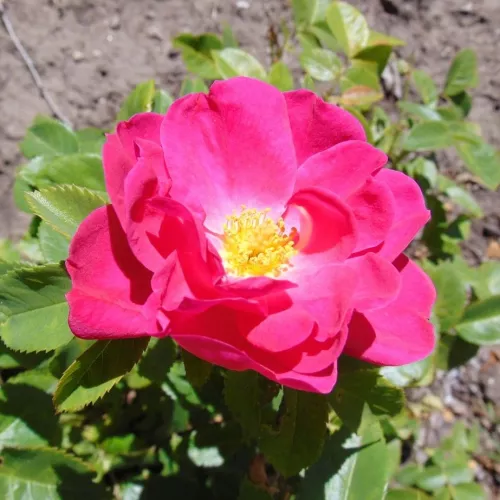
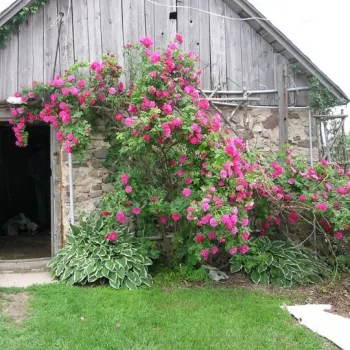
Transform plain fences and walls into romantic vertical displays with JOHN CABOT, a vigorous, winter-hardy rambler that settles reliably even in changeable British summers and breezy, coastal conditions. Its glossy dark foliage and sprays of deep pink, semi-double blooms create a cottage feel without demanding expert knowledge, while its generous height makes it ideal for pergolas, arches and informal screening around the home. Once planted in a suitable, well-drained spot and given simple tying-in, this own-root climber steadily builds a long-lived framework, rewarding you with strong growth and dependable repeat flowering year after year. In a typical garden it focuses first on establishing roots, then extending its canes, before reaching full ornamental impact by its third season, providing a robust, easy-to-manage backdrop for family life.
Usage options
| Target area |
Reasoning |
| House wall or sunny garage wall |
Ideal where you want a strong vertical accent that clothes a plain wall with dense, dark green foliage and deep pink flower clusters. Its vigorous climbing habit covers 2–3 m high and wide, giving a generous display from limited ground space. Suited to those who can provide basic tying-in and seasonal pruning, especially busy homeowners. |
| Pergolas, arches and walk-through structures |
Long, flexible canes make this rose well suited to training over pergolas or arches, creating a tunnel of colour and dappled shade in summer. Repeat flowering ensures interest beyond the first flush, while the semi-double blooms keep the overall effect light and airy. Best where regular plant protection is acceptable to maintain foliage health for design-conscious gardeners. |
| Front garden focal climber |
Works beautifully in classic British front gardens, softening railings or porch supports with romantic pink clusters that read well from the street. Its clear, saturated pink complements box, lavender and cottage perennials, helping you achieve a welcoming entrance without complex planting schemes. Especially suitable for cottage-style enthusiasts. |
| Fence and boundary screening |
With a 120–200 cm spread and up to 320 cm height, JOHN CABOT provides living cladding for side fences and boundaries, adding colour while preserving light. Own-root growth gives a stable, long-term framework that recovers well from occasional damage, so the screen remains even over many years. A good option for long-term planners. |
| Small groups of 2–3 plants in narrow borders |
Planted in a short run or gentle curve, several plants can be trained along wires or a low structure to form a flowing ribbon of blossom. Cluster-flowered shoots ensure that each section carries plenty of colour, even if individual stems are spaced out. This approach suits typical family plots and relatively shallow beds for urban garden owners. |
| Mixed cottage-style border background |
Acts as a tall, flowering backdrop for perennials such as Echinacea, Liatris and Campanula, giving the layered, informal look associated with traditional cottage gardens. Its colour ages from deep pink to softer powder pink, blending gently with changing seasonal tones, even when British weather brings humidity and wind for aesthetics-focused beginners. |
| Large container on patio (over 50 litres) |
Can be grown in a substantial container of at least 40–50 litres, where good root space and regular feeding support healthy canes and flowering. This allows renters or those with paved spaces to enjoy a tall, romantic climber, provided watering and disease-prevention routines are maintained. Well suited to space-limited gardeners. |
| Cold-exposed or northern gardens |
Exceptional frost hardiness (to around -40 °C, RHS H7) makes this cultivar reassuring in colder or wind-exposed UK locations. Even after harsh winters it re-sprouts from its own roots, rebuilding its canopy and flower display without needing graft protection. A reassuring choice for climate-conscious gardeners. |
Styling ideas
- Porch Welcome – Train JOHN CABOT up either side of a front door, underplanted with lavender and dwarf Campanula, to create a soft, traditional welcome – ideal for cottage-style enthusiasts and first-time rose planters
- Garden Screen – Use a sequence of plants along a wire-trained fence, with ornamental grasses at the base for movement and contrast – perfect for family gardens needing gentle privacy without heavy structures
- Pergola Walkway – Cover a simple wooden pergola with JOHN CABOT and interplant with white clematis to extend the season and add contrast – best for design-conscious gardeners ready for basic tying-in work
- Patio Feature – Grow one plant in a 50–70 litre container with a sturdy obelisk, surrounded by pots of herbs for a fragrant, practical seating area – suited to small-space urban gardeners
- Cottage Backdrop – Let JOHN CABOT form the tall layer behind echinacea, liatris and foxgloves, creating a deep pink backdrop that unifies mixed borders – ideal for hobby gardeners building a classic mixed border
Technical cultivar profile
| Property |
Data |
| Name and registration |
JOHN CABOT – pink climbing rambler rose - Svejda, Hybrid Kordesii rambler in the climbing rose group; ARS exhibition name ‘John Cabot’, used mainly as a garden climber. |
| Origin and breeding |
Bred by Felicitas Svejda at Agriculture Canada, Ottawa, from Rosa kordesii × (‘Masquerade’ × Rosa laxa); breeding year 1969, registration and wider release from 1978 onwards. |
| Awards and recognition |
Holds the Royal Horticultural Society Award of Garden Merit, confirming dependable garden performance and ornamental value when grown with appropriate care and plant protection. |
| Growth and structural characteristics |
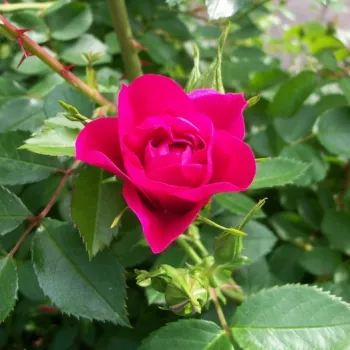
Vigorous climbing habit, typically 200–320 cm high and 120–200 cm wide, with dense, glossy dark green foliage and heavily thorned stems forming a solid, long-lived framework on supports. |
| Flower morphology |
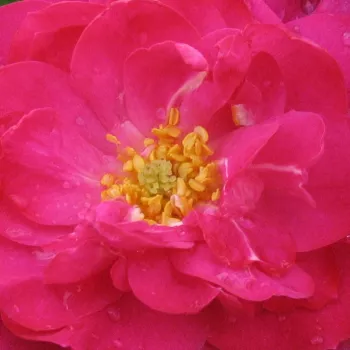
Semi-double, cup-shaped blooms opening flatter with age; 13–25 petals per flower, medium size clusters, remontant with a lighter second flush, some self-cleaning but benefits from deadheading. |
| Colour data and phenology |
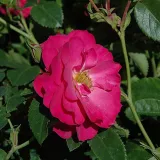
Intense deep pink with a purplish undertone; buds dark crimson-pink (RHS 58C, 61B), ageing through deep orchid pink to soft powder pink, with faster fading in strong sun yet generally good colour retention. |
| Fragrance and aroma |
Mild, delicately rose-scented fragrance; semi-double form offers partial pollinator appeal but limited stamen access, so insect visits are present yet not as intense as in single-flowered roses. |
| Hip characteristics |
Occasionally forms small, ellipsoid hips around 10–14 mm, orange-red at maturity, adding a discreet ornamental note in late season without heavily weighing down the plant structure. |
| Resistance and winter hardiness |
Very hardy (approx. -40 to -37 °C, RHS H7, USDA 3a), tolerates heat if watered in drought; disease resistance is modest, needing regular protection, especially against rust and common foliar diseases. |
| Horticultural recommendations |
Best on supports such as fences, pergolas or walls in sun or light shade; ensure good drainage, balanced feeding and consistent disease control for reliable flowering and an attractive long-term framework. |
JOHN CABOT offers vigorous vertical growth, romantic pink clusters and exceptional cold resilience in a long-lived own-root form that rebuilds reliably over time, making it a thoughtful choice for structured yet characterful family gardens.