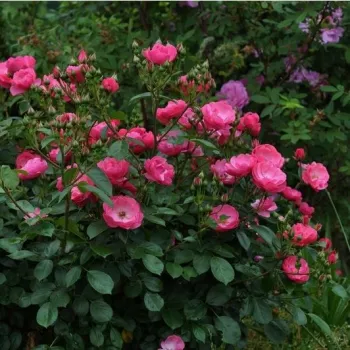
Vibrant, saturated deep pink with a subtle purplish hue. - park rose - mild, subtle-scented rose - soft, light, fruity character
– Vibrant deep pink blooms in generous clusters.
– Bushy, dense habit for hedges and beds.
– Good heat and moderate drought tolerance.
– Mild, fruity fragrance with open stamens.
– Proven, award-winning ADR landscape rose.
– Special feature: Reliable classic for urban plantings and long-lived park displays.
Expert background – Long-lasting plant
pharmaROSA® ORIGINAL 2-litre own-root potted rose
21,60 £
Unfortunately, we are currently unable to ship to the United Kingdom; we only deliver to countries within the European Union. For more information, please contact us!
5(9007)
ANGELA® – pink park rose - Kordes
With its bushy habit, Angela® brings reliable, season-long colour to family gardens, combining classic charm with modern ease of care. The semi-double, deep pink clusters create a soft cottage-garden effect, brightening beds and borders from early summer well into autumn. As an own-root shrub, it develops a stable, long-lived framework that regenerates well after pruning and settles securely even where soils are heavy and need careful water management. Medium-sized, cluster-flowering heads are largely self-cleaning, so spent blooms drop away with minimal effort, keeping the plant neat for front gardens and smaller spaces. Over time, you can expect a natural progression – strong root establishment in the first year, fuller shoot growth in the second, and a convincing, mature display by the third, giving you dependable cottage-style colour with very little complication.
Angela® rose with a soft, light fruity scent.
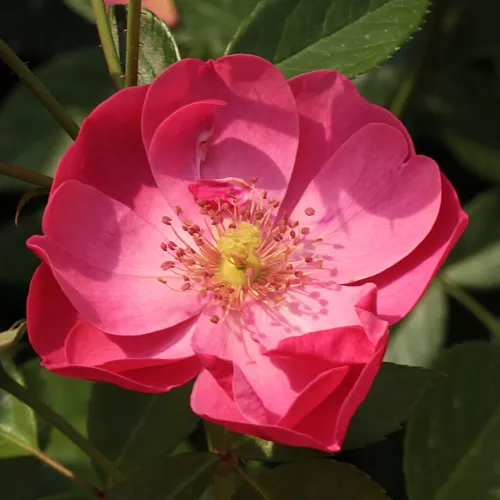
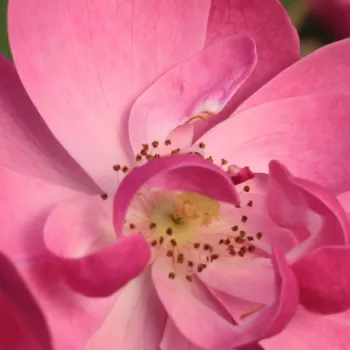
Angela® rose in semi-double bloom, showing the flower centre.
Angela® rose inner flower structure with exposed stamens
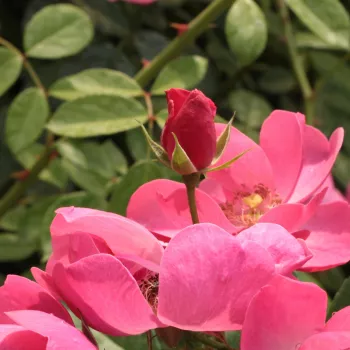
Freshly opened flower of Angela® in bright cyclamen-pink.
Usage options
Target area
Reasoning
Front garden focal shrub
The bushy, upright habit (to around 120–170 cm) quickly forms a visible presence from the street, while the dark, glossy foliage frames the deep pink clusters cleanly. Medium self-cleaning means fewer deadheading rounds, so a neat look is easy to maintain for a busy homeowner
Small mixed border in a family garden
Remontant flowering brings repeated waves of blossom through the season, allowing you to combine Angela® with perennials for constant interest. The semi-double flowers and mild fruity scent add softness without overwhelming other plants, ideal for an attractive, low-fuss border for the aesthetic-focused beginner
Informal cottage-style grouping (1–3 plants)
Planted in a loose triangle or short row, Angela® creates a relaxed, cottage-style look that reads as one generous shrub. The rich pink tones blend naturally with classic cottage perennials, so you achieve a traditional feel without complex design decisions, supporting the style-conscious but time-poor gardener
Low-maintenance flowering hedge
At 90–100 cm spacing, the dense foliage and repeat clusters knit into a light screening hedge, softening boundaries or driveways. Medium disease resistance and good heat tolerance help keep it serviceable with only routine care, suiting those who want structure and colour along a boundary with minimal technical knowledge
Urban and coastal-adjacent front gardens
This variety copes well with city conditions and summer warmth, maintaining foliage quality and flower production where reflected heat or wind can be an issue, supporting gardens that need to stay tidy despite busier weather and less sheltered spots for the practical urban resident
Part-shaded side garden or passage
Angela® tolerates partial shade, so it can brighten side paths or east-facing plots where many roses disappoint. The colour softens to a silvery pink in lower light, giving subtle interest rather than harsh contrast, ideal for those making the most of limited, uneven light around a normal-size home
Large container or terrace planter (40–60 litres)
In a substantial container with good drainage, Angela® offers shrub-like presence on patios or paved front gardens. Own-root growth ensures the plant builds a stable framework over years, while moderate feeding and a yearly prune maintain form, appealing to balcony and terrace owners with modest gardening experience
Pollinator-supporting family garden bed
Semi-double blooms with exposed stamens are accessible to bees and other insects, adding wildlife value without sacrificing ornamental impact. The repeated flushes across the season mean food and colour are present for longer in a small garden bed, suiting families who want a child-friendly, wildlife-aware planting
Styling ideas
Cottage-curve – Line a gently curving front path with Angela® and interplant with soft catmint and low geraniums for a classic cottage walk – ideal for lovers of traditional British front gardens.
Pink-partner – Combine 2–3 Angela® with white campanulas and dusky mauve salvias in a mixed border to highlight the shifting pink tones – suited to beginners wanting easy, harmonious colour.
Hedgerow-soft – Create a loose, shoulder-height hedge along a driveway, weaving in evergreen honeysuckle or dwarf shrubs for year-round structure – good for homeowners seeking privacy without heavy maintenance.
Patio-centre – Plant Angela® in a 50–60 litre terracotta pot with trailing thyme or creeping bugle at the base to soften the rim – perfect for small paved gardens or rented spaces.
Shaded-border – Use Angela® as the backbone of a part-shaded side border, underplanting with dwarf hostas and ferns to contrast the glossy foliage – appealing to urban gardeners making use of difficult side spaces.
Technical cultivar profile
Parameter
Data
Name and registration
Shrub rose, park type; registered as KORday, marketed as Angela® / Heckenzauber®. Exhibition floribunda–shrub category, own-root form supplied in 2-litre containers for garden use.
Origin and breeding
Raised by Reimer Kordes, W. Kordes’ Söhne, Germany. Parentage ‘Yesterday’ × ‘Peter Frankenfeld’. Bred, registered and introduced in 1984, with a strong track record in European plantings.
Awards and recognition
ADR Germany 1982; Vermeil medal Orléans 1986; Silver medal Courtrai 1986; certificates from Belfast and Bagatelle, plus AJJH Prix de la Rose, confirming enduring landscape value.
Growth and structural characteristics
Bushy shrub reaching approx. 120–170 cm high and 80–130 cm wide, with dense, dark green glossy foliage and only slight prickliness, forming a substantial yet manageable garden framework over time.
Flower morphology
Semi-double, cup-shaped flowers with 13–25 petals, small in size but carried in large, showy clusters. Remontant habit with a particularly abundant second flush, offering long seasonal display.
Colour data and phenology
Vibrant deep pink with a subtle purplish hue; buds dark mauve-pink, opening bright cyclamen-pink then softening to pastel, slightly silvery pink, especially in strong sun, giving multi-tonal interest.
Fragrance and aroma
Mild, light fruity fragrance; noticeable at close range without dominating a seating area. Suitable where scent is welcome but strong perfume could be overpowering or clash with other aromatic plants.
Hip characteristics
Moderate set of small, orange-red, ellipsoidal hips, around 8–13 mm across, adding quiet late-season interest without significantly affecting the plant’s overall flowering performance in normal use.
Resistance and winter hardiness
Hardy to around –23 to –26 °C (RHS H7; USDA 5b; Swedish zone 4). Good heat tolerance and moderate drought resilience; resistant to powdery mildew, with medium resistance to black spot and rust.
Horticultural recommendations
Best in well-drained soil with regular feeding and annual pruning to shape. Suitable for beds, hedging and urban plantings; space 90–170 cm depending on use and allow own-root plants to establish gradually.
ANGELA® combines reliable repeat flowering, flexible shrub use and urban-tolerant resilience in a long-lived own-root form, making it a thoughtful choice if you want a classic rose that will quietly earn its place over many years.
Competition and Show Awards:
Orléans – Vermeil medal (1986); Courtrai – Silver medal (1986); Belfast International Rose Show – Certificate (1987); Bagatelle (Paris) – Certificate of Merit, Landscape Rose Competition (1988); AJJH – Prix de la Rose
Closed Bud:
Dark mauve-pink with a delicate violet tone at the tip.
Newly Opened Flower:
Bright, cyclamen-tinged pink with a paler outer petal edge.
Full Bloom:
Saturated deep pink, with the central zone slightly contrasting in a lighter shade.
Before Fading:
Its colour lightens to a pastel shade, with a slight silvery-pink veil.
Colour Fading Description:
On opening, the saturated deep pink gradually becomes a pastel, slightly silvery-pink shade; in strong sunlight it lightens more quickly.
Pollinator Attraction:
Semi-double, open flowers with exposed stamens attract pollinators, as flower form (single/semi-double/double) and the accessibility of the stamens influence their attractiveness.
Our product is a rose grown with pharmaROSA®’s unique cultivation technology!
2-litre, own-root, potted rose.
With a shoot system appropriate to the season.
With a root system that thoroughly permeates the growing medium.
Quality compliant with the requirements of the E.N.A. (European Nurserystock Association).
Supplied in unique packaging that prevents damage.
Can be planted during frost-free periods.
True-to-variety rose bush with a unique identifier.
The pharmaROSA® own-root potted rose is a well-rooted plant that supports reliable establishment when planted and cared for properly, so it can be planted whenever the soil is not frozen.
Crop overview: several varieties and growth stages in a short crop section.Shoot system: intensive growth of fresh basal shoots on a young plant.Root system: demonstration of a vigorous root system permeating the growing medium, by removing the pot.Balance: mature plant with root system and shoots in harmony with each other.
Information about the videos
The video series is not a “seasonal showcase”; it illustrates the essence of pharmaROSA® own-root cultivation in a tangible way: how the plant is built up, what the root system is like and how the shoot system regenerates. The recordings were therefore made at different times and with plants at various stages of development, so mixed foliage levels and differing stages of growth may appear in the videos. They are not a ‘sample’ of the batch dispatched, but a visual explanation of how the technology works. The current condition of the rose available to order — typical for the given period and similar to what you can expect to receive in the parcel — is shown in the upper part of the product page.
Pages for private customers Garden roses for the family garden, with minimal care → ORIGINAL® Premium garden roses – instant impact, a truly showpiece garden → EXTRA® Pages for professionals and private customers Roses for public spaces – large areas, sustainable maintenance → NATURAL® Roses for projects – hedge and row planting, fast implementation → RAPID® For professional partners only Production – propagation material for garden roses, wholesale → NEONATAL®
Company details
PharmaRosa Ltd. Company registration number: 01-09-717479 VAT number: 13075314-2-43 Plant health registration no.: HU130721 Bank account (IBAN): HU85117631891388688400000000 BIC (SWIFT): OTPVHUHB Bank name: OTP Bank Nyrt.