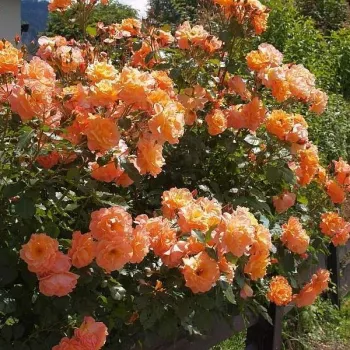
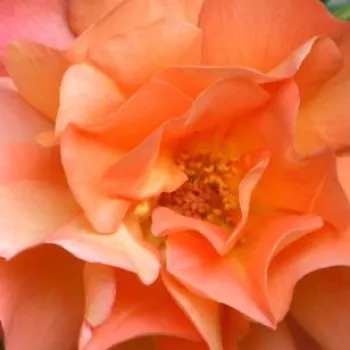
Warm, copper-tinged orange shade with delicate peach tones. - park rose - strong, long-lasting scented rose - spicy, peachy
– Strong, long-lasting spicy-peachy fragrance.
– Vivid copper-orange blooms with peach tones.
– Reliable repeat flowering through the season.
– Tall, upright shrub for beds and hedges.
– Good heat and moderate drought tolerance.
– Special feature: Multi-award winner, including ADR and RHS Award of Garden Merit.
Timeless elegance – Clear professional advice
pharmaROSA® ORIGINAL 2-litre own-root potted rose
18,70 £
Unfortunately, we are currently unable to ship to the United Kingdom; we only deliver to countries within the European Union. For more information, please contact us!
5(10276)
Westerland® park shrub rose – KORwest
Sunrise shades of coppery orange and peach give Westerland® a relaxed, seaside charm that feels instantly at home in British front gardens, even where windswept conditions call for a resilient, anchoring shrub. Its tall, upright habit works beautifully as a flowering screen or informal hedge, while the semi-double blooms open in generous clusters that shed cleanly for a naturally tidy look with minimal effort. Strong, spicy‑peach fragrance carries on warm evenings, and the remontant flushes mean colour returns reliably throughout the season without complicated pruning. As an own‑root plant, it settles steadily, building a long‑lived, balanced bush that you can simply enjoy, with a practical rhythm of roots, then shoots, then full ornamental maturity over its early years. Good heat and drought tolerance support low‑input gardening in today’s changing summers, while award‑backed reliability from Kordes provides added confidence for both beginners and keen rose lovers, whether used as a specimen, in cottage‑style borders, or trained loosely as a short climber.
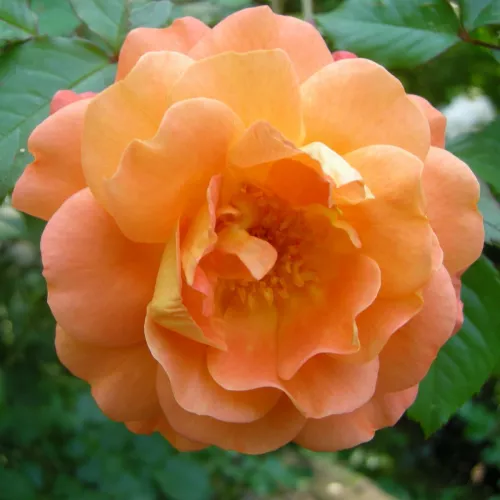
Westerland® showing its rich copper-orange flowers in full bloom.
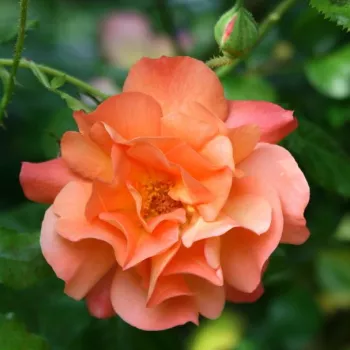
Westerland® in freshly opened bloom, showing vivid fire-orange petals with peach tones.
Usage options
Target area
Reasoning
Front garden focal shrub
Westerland® forms a tall, upright, well-foliaged shrub that quickly gives structure at the front of the house, with eye-catching copper-orange clusters drawing the eye from the street. Its naturally tidy, self-cleaning blooms reduce deadheading, ideal when you want a welcoming display without frequent fuss – a dependable choice for the time-poor homeowner.
Small group planting in borders
Planted in groups of 3–5, the warm colour and repeated flowering create a generous, cottage-style drift that reads as one harmonious shrub from a distance. The own-root habit lets each plant adapt to local soil and care, building a stable, long-lived stand that knits into mixed borders over several seasons – well suited to style-conscious beginners.
Relaxed flowering hedge
Its height and upright structure, combined with glossy dark foliage, make Westerland® effective as an informal, flowering hedge at about 1.7–2.4 m. Regular light trimming is enough to keep it in bounds while preserving flowering, so you gain privacy and colour without intricate shaping – attractive for practical garden-focused families.
Near patios, paths and seating
The strong, spicy-peach scent carries especially well when planted by a path or terrace, where you pass close to the blooms. Semi-double clusters at nose height give repeated aromatic moments from early summer onwards, enhancing daily routines without extra gardening tasks – appealing to relaxation-seeking residents.
Mixed cottage and perennial borders
Its warm, coppery orange tones blend beautifully with blue and purple perennials like lavender or clematis, creating a classic cottage palette. Because flowers are borne in clusters that clean reasonably well, the shrub stays visually neat among other plants, supporting that “lived-in but cared-for” look – ideal for cottage-garden enthusiasts.
Lightly trained as a short climber
With canes reaching up towards 2.4 m, Westerland® can be fanned over a low wall, pillar, or sturdy arch, giving a relaxed climber effect from a shrub rose. Flexible, upright shoots respond well to simple tying-in rather than precision pruning, suiting structures that need flowered coverage without technical training – perfect for DIY-minded gardeners.
Sunny but wind-exposed sites
This Kordes-bred rose combines good heat tolerance with sturdy growth, coping well where sea winds or open aspects can flatten weaker shrubs; its anchoring habit and resilient foliage keep it presentable with basic staking or shelter. This makes it reassuring on plots where breezy conditions might otherwise limit rose choices – a comfort for coastal and upland owners.
Part-shade family gardens
Suitable for partial shade, Westerland® still produces attractive clusters where houses or trees limit full sun, as long as the site is reasonably open. Own-root vigour and medium maintenance needs mean you can rely on steady flowering with straightforward annual pruning and feeding – a practical fit for busy urban and suburban households.
Styling ideas
Seaside-screen – Use Westerland® in a loose hedge with ornamental grasses to echo coastal light and movement – ideal for breezy, exposed gardens wanting shelter and colour.
Cottage-duet – Pair its coppery orange clusters with soft blue lavender and dusky catmint for a romantic, low-maintenance border – perfect for cottage-style front gardens.
Patio-perfume – Position a specimen near a terrace corner, underplanted with thyme and low salvias, to enjoy evening fragrance close to seating – suited to relaxation-focused patios.
Gateway-accent – Lightly train Westerland® over an arch or between gate posts, adding vertical colour and scent without complex pruning – ideal for welcoming front entrances.
Family-mix – Combine with hardy perennials and small shrubs in a mixed border where one strong structural rose anchors the planting – good for family gardens needing reliable backbone.
Technical cultivar profile
Parameter
Data
Name and registration
Westerland® park shrub rose, registered as KORwest, a climber/shrub type used as a robust park rose; ARS exhibition name Westerland, verified for authenticity for consumer garden use.
Origin and breeding
Bred by Reimer Kordes (W. Kordes’ Söhne, Germany) from ‘Friedrich Wörlein’ × ‘Circus’; bred 1969, registered 1976 and introduced after 1976, now widely proven in temperate climates.
Awards and recognition
Highly decorated cultivar: Certificate of Merit and Fragrance Award at New Zealand Rose Trials (1973), ADR winner Germany (1974), and RHS Award of Garden Merit (1993) for garden reliability.
Growth and structural characteristics
Strong, upright shrub reaching about 170–240 cm high and 150–210 cm wide, with dense, glossy dark green foliage and moderate prickles; self-supporting but can be lightly trained as a short climber.
Flower morphology
Semi-double, cup-shaped clusters of large blooms (around 7–10 cm), with roughly 13–25 petals; remontant habit with a particularly generous second flush, and good natural shedding of most spent flowers.
Colour data and phenology
Warm copper-orange with peach-yellow tones; buds are deep reddish copper, opening vivid fire-orange then softening towards peach and pale salmon. Colour holds very well, lightening gradually in strong sun.
Fragrance and aroma
Notable strong fragrance, combining spicy and fruity-peach notes that persist well in warm weather; semi-double form and extended opening also make blooms partially attractive to pollinating insects.
Hip characteristics
Hip set is usually sparse; when present, ovoid orange-red hips about 12–17 mm may form, adding a light seasonal accent but not a major ornamental feature or seed source under normal garden conditions.
Resistance and winter hardiness
Rated H7, hardy to roughly −26 to −23 °C (USDA 5b, Swedish Zone 4); good heat and moderate drought tolerance. Disease resistance medium overall, with good black spot resistance but monitor mildew and rust.
Horticultural recommendations
Best as a specimen, hedge or park shrub at 130–220 cm spacing; prefers well-drained, fertile soil and shelter from late frosts. Suitable for partial shade; for containers use at least a 40–50 litre volume.
Westerland® park shrub rose offers award-backed reliability, strong fragrance and resilient structure in an own-root form that matures into a long-lived feature, making it a thoughtful choice for relaxed, flower-filled family gardens.
Detailed product attributes
Product Identification Data
Product Name:
WESTERLAND® – orange park rose - Kordes
Product Type:
pharmaROSA® ORIGINAL - 2-litre own-root potted rose
Competition and Show Awards:
Certificate of Merit & Fragrance Award – New Zealand Rose Trials (1973); ADR winner – German National Rose Trials (1974); RHS Award of Garden Merit – Royal Horticultural Society (1993)
Pollinator Attraction:
Semi‑double, clustered blooms open for an extended period; because the semi‑double flower form typically leaves the stamens partially accessible, this variety is attractive to pollinating insects.
Pollinator-Friendly Rating:
Due to its semi-double flowers it is considered partially pollinator-friendly.
Our product is a rose grown with pharmaROSA®’s unique cultivation technology!
2-litre, own-root, potted rose.
With a shoot system appropriate to the season.
With a root system that thoroughly permeates the growing medium.
Quality compliant with the requirements of the E.N.A. (European Nurserystock Association).
Supplied in unique packaging that prevents damage.
Can be planted during frost-free periods.
True-to-variety rose bush with a unique identifier.
The pharmaROSA® own-root potted rose is a well-rooted plant that supports reliable establishment when planted and cared for properly, so it can be planted whenever the soil is not frozen.
Crop overview: several varieties and growth stages in a short crop section.Shoot system: intensive growth of fresh basal shoots on a young plant.Root system: demonstration of a vigorous root system permeating the growing medium, by removing the pot.Balance: mature plant with root system and shoots in harmony with each other.
Information about the videos
The video series is not a “seasonal showcase”; it illustrates the essence of pharmaROSA® own-root cultivation in a tangible way: how the plant is built up, what the root system is like and how the shoot system regenerates. The recordings were therefore made at different times and with plants at various stages of development, so mixed foliage levels and differing stages of growth may appear in the videos. They are not a ‘sample’ of the batch dispatched, but a visual explanation of how the technology works. The current condition of the rose available to order — typical for the given period and similar to what you can expect to receive in the parcel — is shown in the upper part of the product page.
Pages for private customers Garden roses for the family garden, with minimal care → ORIGINAL® Premium garden roses – instant impact, a truly showpiece garden → EXTRA® Pages for professionals and private customers Roses for public spaces – large areas, sustainable maintenance → NATURAL® Roses for projects – hedge and row planting, fast implementation → RAPID® For professional partners only Production – propagation material for garden roses, wholesale → NEONATAL®
Company details
PharmaRosa Ltd. Company registration number: 01-09-717479 VAT number: 13075314-2-43 Plant health registration no.: HU130721 Bank account (IBAN): HU85117631891388688400000000 BIC (SWIFT): OTPVHUHB Bank name: OTP Bank Nyrt.